
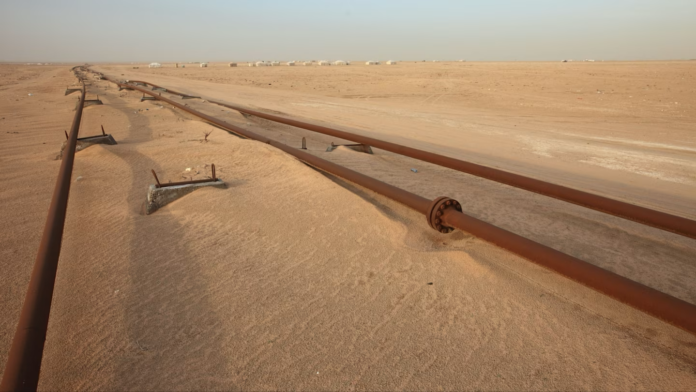
Several Gulf countries are holding discussions on potential pipeline projects aimed at reducing dependence on the Strait of Hormuz after months of disruption to shipping routes in the strategic waterway.
Officials from Kuwait said talks were taking place with Saudi Arabia and the United Arab Emirates over possible infrastructure links that could transport crude oil to ports outside the Gulf. The discussions come as regional tensions and attacks linked to the conflict involving Iran continue to affect maritime trade.
Kuwait Petroleum Corporation executive Sheikh Khaled Ahmad Al-Sabah said the recent instability had highlighted the importance of alternative export routes. He noted that pipeline networks once viewed as unnecessary are now being reconsidered as part of long-term energy security planning.
The Strait of Hormuz, one of the world’s busiest oil transit chokepoints, has faced severe disruption for more than three months, impacting commercial shipping and increasing pressure on Gulf energy producers.
Saudi Arabia and the UAE already operate pipelines capable of bypassing the waterway, and both countries have increased their use since the crisis escalated. However, other Gulf exporters would require new infrastructure projects to access alternative routes.
According to officials involved in the discussions, proposed plans could allow oil shipments to move through Saudi or Emirati ports before being transported onward through pipelines connected to facilities outside the Gulf.
The UAE has also studied the possibility of a west-east crude pipeline, a proposal that has surfaced several times in recent years but never moved forward. Analysts say political sensitivities and concerns over regional dependence have previously slowed similar projects.
Still, the prolonged uncertainty surrounding the Strait of Hormuz has renewed interest in contingency measures, particularly as Gulf states seek to protect exports and maintain stable supplies to global markets.
Kuwait is also discussing potential oil storage facilities with Oman on the opposite side of the strait, according to officials familiar with the talks.
