
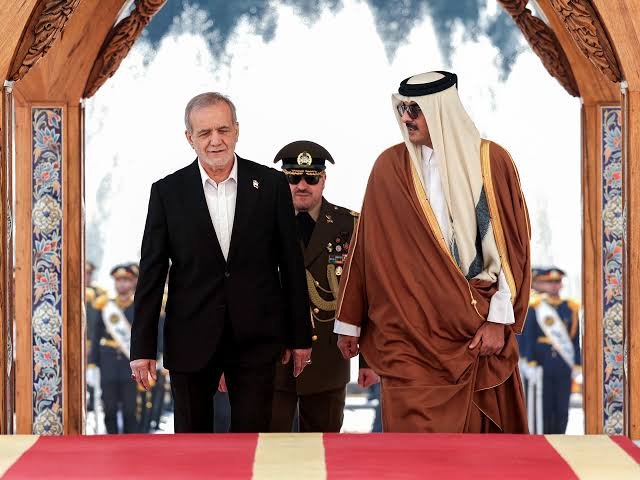
Qatar continues to pursue a foreign policy that combines close security ties with the United States and diplomatic engagement with Iran, reflecting its efforts to safeguard regional stability and national interests.
The approach was highlighted in July when a Qatari delegation visited Iran to support de-escalation efforts in coordination with the United States, underscoring Doha’s role as a regional mediator during periods of heightened tension.
While Qatar hosts Al Udeid Air Base, one of the largest US military facilities in the Middle East, it also shares the North Field-South Pars natural gas reservoir with Iran. The shared energy resource and the importance of secure shipping through the Strait of Hormuz have reinforced the need for continued communication between the two neighbors.
Analysts say Qatar’s strategy is driven less by traditional neutrality than by geography. The country relies on its security partnership with Washington while maintaining dialogue with Tehran to reduce the risk of regional conflict that could threaten energy exports and economic stability.
Qatar has also played a role in facilitating communication between the United States and Iran during periods of strained relations. In 2026, Doha welcomed efforts aimed at easing tensions and continued supporting technical discussions between the two sides.
The Gulf state has built a reputation as a mediator in regional and international conflicts, hosting negotiations on issues ranging from Afghanistan and Gaza to Lebanon, humanitarian access and prisoner exchanges.
Officials and analysts note that Qatar’s mediation does not give it authority over larger powers, but instead allows it to maintain channels of communication that can help reduce tensions and support dialogue.
As regional challenges continue, Qatar’s foreign policy remains focused on balancing strong defense partnerships with active diplomacy, seeking to preserve stability in a region critical to global energy supplies.
