
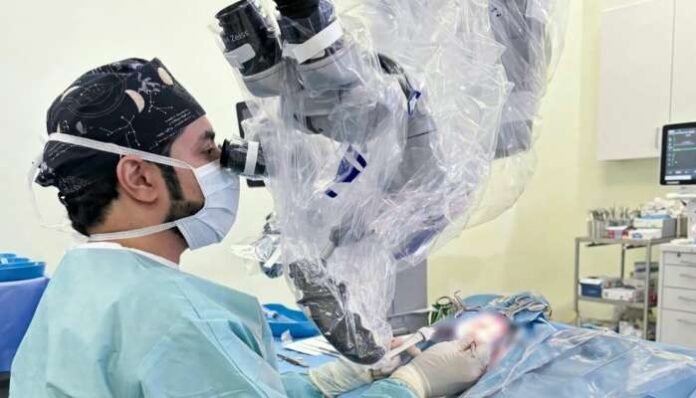
Oman has reached a new medical milestone after University Medical City completed its first middle ear Hearing Implant surgery. The two-hour operation helped a woman with progressive sensorineural hearing loss regain significant hearing ability.
The patient had experienced a gradual decline in her hearing over several years. Medical assessments eventually identified moderate to severe sensorineural hearing loss. Although she previously used conventional hearing aids, those devices did not provide sufficient improvement.
Consequently, specialists carried out a detailed medical and audiological assessment to identify a suitable treatment. After reviewing her condition, the medical team considered her an appropriate candidate for a middle ear implant. This technology offers another rehabilitation option for patients who receive limited benefits from traditional hearing aids.
The surgical team completed the procedure several weeks ago. Subsequently, specialists activated the external processor, allowing the patient to benefit from the implanted device. She experienced substantial improvements in hearing, sound recognition and speech understanding. Moreover, she could distinguish conversations more effectively in crowded places and large gatherings.
Dr Khalid Said Al Zaabi led the operation alongside the Otology and Ear Surgery team. He serves as a senior consultant otologist at Sultan Qaboos University Hospital within University Medical City. The achievement highlights the expertise of Oman’s medical professionals and the development of specialised surgical services.
Al Zaabi explained that middle ear implants provide an effective alternative for selected patients. Unlike conventional hearing aids, the technology bypasses the outer ear to transmit sound through an implanted system. Therefore, patients may avoid certain problems associated with traditional devices, including earwax accumulation inside the ear canal.
However, the procedure requires considerable surgical precision because the implanted components are extremely small. Surgeons must carefully position the device against the ossicles, which are tiny bones inside the middle ear. At the same time, they must preserve the natural connection and movement of these bones.
Doctors also assess several medical factors before recommending this treatment. These include the type of hearing loss, which may be conductive, sensorineural or mixed. In addition, specialists examine the condition of the middle ear and confirm the presence of the ossicles through CT scans.
Patients also complete hearing assessments and device trials before surgery. These examinations help doctors determine whether the technology suits each patient’s condition. Furthermore, they allow specialists to evaluate the expected benefits before proceeding with implantation.
The latest Hearing Implant achievement builds on University Medical City’s existing programmes for hearing rehabilitation. The medical centre previously introduced Bonebridge and cochlear implant programmes. Now, the addition of middle ear implants expands its available treatment options for people experiencing different forms of hearing loss.
The development reflects the institution’s continued investment in specialised medical technologies and advanced treatment services. It also demonstrates the growing capabilities of national medical teams in complex ear surgery. Consequently, patients may gain access to additional rehabilitation options without seeking similar procedures elsewhere.
University Medical City aims to strengthen its role in diagnosing and treating hearing disorders. Through expanding its specialised programmes, the institution can address a wider range of patient needs. The successful operation represents another step in developing advanced hearing care services across Oman.
