
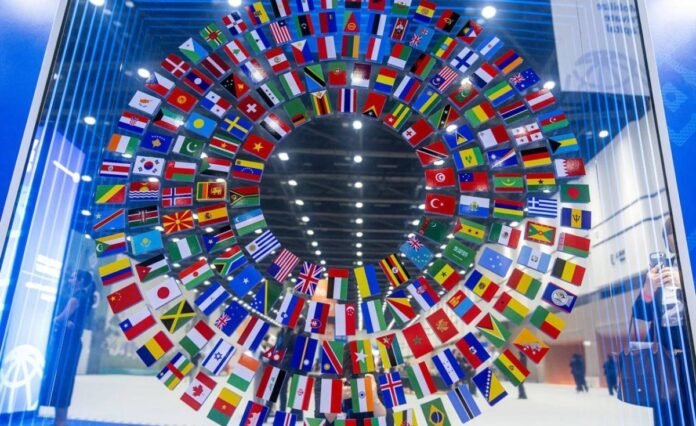
Kuwait is participating in the annual Kuwait IMF Meetings in Bangkok, where global financial leaders are discussing economic stability, development and international cooperation. The 81st annual meetings of the International Monetary Fund (IMF) and World Bank Group opened on Monday, October 12. Organizers have scheduled discussions through October 18, covering major challenges affecting economies and financial markets worldwide.
The agenda includes slowing global growth, rising debt pressures, fluctuations in energy prices and artificial intelligence’s economic impact. In addition, participants will examine monetary policy, investment opportunities and cooperation between countries and international financial institutions. These discussions come as governments and financial institutions navigate uncertainty while seeking ways to support sustainable economic development.
Kuwait’s delegation is led by Finance Minister Yaqoub Al-Rifai, while Gulf Cooperation Council Secretary-General Jasem Al-Budaiwi is also attending. Other participants include Kuwait Banking Association Chairman Hamad Al-Marzouq and Central Bank of Kuwait Governor Basel Al-Haroon. Their participation provides opportunities to exchange views on financial policy, regional priorities and developments affecting international markets.
Several major Kuwaiti financial institutions have also sent representatives to the meetings. Kuwait Finance House is represented by a delegation led by Chairman Hamad Al-Marzouq. Meanwhile, National Bank of Kuwait is participating under Vice Chairman and Group Chief Executive Officer Essam Al-Sager. Boubyan Bank’s delegation is led by Vice Chairman and Group CEO Adel Al-Majed.
Burgan Bank Chairman Sheikh Abdullah Al-Sabah represents his institution, while Ahli Bank of Kuwait has sent Deputy Group CEO Abdullah Al-Sumait. Their attendance highlights the involvement of Kuwait’s banking sector in international discussions about financial conditions and economic development. Furthermore, the meetings allow financial institutions to exchange perspectives on investment, emerging technologies and changing global economic conditions.
Kuwait IMF Meetings also take place as Thailand seeks to promote its economic strengths and attract international investment. Thai government deputy spokesperson Lalida Periswiwatana said the country aims to showcase opportunities in future industries. She also highlighted plans to strengthen cooperation with international financial institutions and encourage foreign investment.
The opening day features more than 25 economic activities and discussion sessions. Topics include affordable artificial intelligence applications that could create employment opportunities and improve job quality. Other sessions will examine the future of Asian economies and the role of young people and civil society in development policymaking. Consequently, the program addresses both economic transformation and the importance of broader public participation.
The IMF has also introduced a book examining Asia’s future and the forces shaping its economic direction. Its subjects include demographic changes, economic fragmentation, shifting trade patterns, technology and energy. In addition, dialogue sessions involving IMF and World Bank leaders will explore economic policy and development priorities.
Organizers have scheduled the main plenary session for October 16, bringing together institutional leaders and representatives from member countries. The International Monetary and Financial Committee will then meet on October 17. These sessions will provide further opportunities to discuss international economic conditions and policy coordination.
Thailand is hosting the annual meetings for the second time, following its previous hosting in 1991. Overall, Kuwait IMF Meetings give Kuwaiti officials and financial institutions a platform to engage with international partners. The discussions also offer opportunities to exchange ideas on investment, technological change and policies that support economic resilience.