
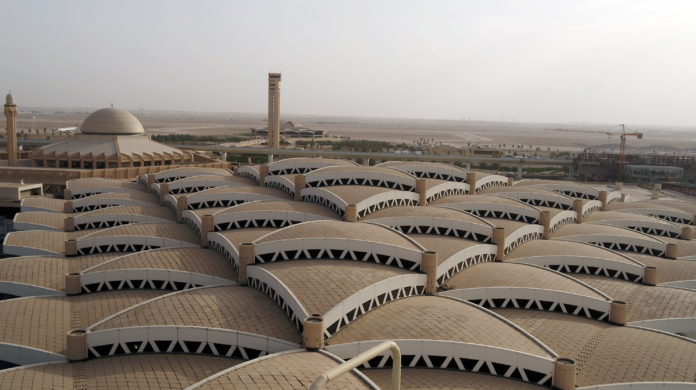
A Riyadh Airport Attack killed 12 people and injured 309 others after a missile struck King Khalid International Airport on Saturday. Saudi Arabia’s General Authority of Civil Aviation announced the casualties early Sunday. The attack prompted officials to suspend airport operations temporarily while authorities assessed the damage.
The victims included four Saudi citizens and eight foreign nationals from several countries. Authorities identified the foreign victims as two Bangladeshis, a Palestinian, an American, an Egyptian, a Jordanian, a Syrian, and a Sudanese national. Moreover, the authority reported that some of the 309 injured people remained in critical condition.
Following the strike, airport officials suspended operations while teams examined the damage and assessed safety conditions. The aviation authority described the incident as another assault against Saudi Arabia’s civilian aviation infrastructure. Consequently, the disruption raised immediate concerns for passengers, airline operators, and airport employees.
Later on Saturday, Coalition to Support Legitimacy in Yemen spokesman Major General Turki Al-Maliki reported another attack. He said King Fahd International Airport in Dammam, a major eastern transport hub, also came under attack. The incident marked the first reported targeting of that airport since the regional conflict began on February 28.
The latest strike followed several deadly attacks against Saudi airports earlier in the week. Wednesday’s attack on Riyadh airport killed a Sudanese man, while Tuesday’s strike on Abha airport killed two women. Thursday’s attacks on Riyadh airport also killed three people, including a Saudia pilot, according to previous reports.
Meanwhile, the repeated strikes have disrupted commercial aviation and forced airlines to reconsider their schedules. Flight-tracking data recorded at least 291 cancellations at Riyadh airport over the preceding 24 hours. Several international and regional airlines had already suspended selected services to Riyadh and other Saudi airports.
A European aviation safety agency also expanded its guidance concerning Saudi airspace. The agency warned that attacks and interception efforts could increase the risk of civil aircraft misidentification. Furthermore, the growing threat to aviation infrastructure has raised concerns about flight safety and regional air travel.
Saudi Arabia’s Foreign Ministry advised travelers stranded abroad because of the disruptions to seek assistance. Officials directed affected passengers to contact Saudi diplomatic missions in their current countries. King Khalid International Airport also urged travelers to confirm flight details with airlines before leaving for the airport.
The attacks have drawn international condemnation, with governments and regional organizations calling for an end to strikes against civilian facilities. The coalition supporting Yemen’s internationally recognized government also announced large-scale operations against Houthi targets. It reported destroying more than 130 targets during operations announced on Friday.
The Houthis have recently targeted several Saudi locations, including Riyadh, Abha, Khamis Mushayt, Jazan, and Najran. The coalition also previously reported attempted attacks against Makkah and an electricity distribution station serving Madinah’s Prophet’s Mosque. These developments have heightened concerns about threats to civilian infrastructure and essential services.
The latest Riyadh Airport Attack underscores the growing impact of the conflict on civilian transportation and regional security. Saudi officials continue assessing the damage while passengers face cancellations and possible travel delays. Authorities have urged travelers to monitor airline updates and follow official safety instructions before making airport journeys.
