
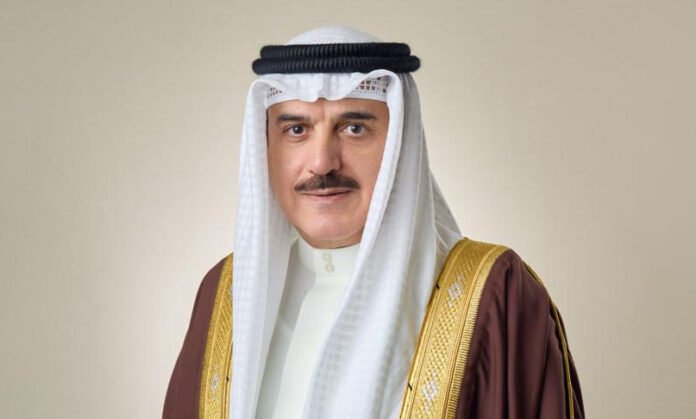
Bahrain’s Parliament will prioritise Food Security, water resources, investment and economic growth during its exceptional fifth legislative session. Speaker Ahmed Al Musallam made the commitment while addressing the opening ceremony attended by His Majesty King Hamad.
Al Musallam said the extension of the sixth legislative term placed additional responsibility on Parliament and the Shura Council. He pledged to translate national priorities into practical legislation while strengthening cooperation between the legislative and executive authorities. Furthermore, he stressed that national unity, public safety and citizens’ interests must guide lawmakers’ decisions.
The Speaker outlined plans for legislation supporting the knowledge economy, investment opportunities, and sustainable access to essential resources. He said the current session should deliver meaningful results rather than simply continue existing parliamentary procedures. Accordingly, lawmakers will need to coordinate with government institutions to advance national development priorities.
Al Musallam thanked King Hamad for supporting Bahrain’s legislative authority and developing the country’s parliamentary experience. He also praised Crown Prince and Prime Minister Prince Salman bin Hamad Al Khalifa for strengthening cooperation with Parliament. In addition, he highlighted government development projects, strategic planning and private-sector partnerships as important contributors to economic progress.
The Speaker also acknowledged the King’s directives to assist citizens affected by Iranian attacks against Bahrain. These measures included government action to address damage resulting from the incidents. Meanwhile, he praised the armed forces and military, security and civilian authorities for their response. He also credited public solidarity with helping reinforce national resilience during a challenging period.
Al Musallam condemned Houthi militia attacks targeting civilian locations in Saudi Arabia, including airports in Riyadh and Abha. He described the attacks as violations of international law and international humanitarian law. He also expressed appreciation for the United Arab Emirates and President Shaikh Mohammed bin Zayed Al Nahyan. According to Al Musallam, the two countries maintain longstanding ties and continued cooperation.
On regional affairs, the Speaker reaffirmed Bahrain’s support for Palestinian rights and an independent, sovereign Palestinian state. He referred to the two-state solution and relevant United Nations resolutions as the basis for that position. Additionally, he called for a Middle East free of weapons of mass destruction. He stressed that authorities must protect freedom of navigation through strategic straits and maritime corridors.
The session also highlighted national history and the contribution of public institutions. Al Musallam welcomed the King’s designation of 2027 as the Year of Isa bin Salman. The initiative will honour the late Amir’s legacy and recognise his contributions to Bahrain’s development. Moreover, the Speaker connected preserving national memory with understanding the foundations of the country’s current progress.
He also marked the 25th anniversary of the Supreme Council for Women, chaired by Princess Sabeeka bint Ibrahim Al Khalifa. Al Musallam praised Bahraini women’s achievements across different sectors and recognised the council’s role in advancing their participation. Furthermore, he commended Shaikh Nasser bin Hamad Al Khalifa for his contributions to youth, sports and economic initiatives.
Al Musallam acknowledged cooperation with the Shura Council under its chairman, Ali Saleh Al Saleh. He also thanked Parliament and Shura Council Affairs Minister Ghanim Al Buainain for supporting coordination between Parliament and government. These partnerships will remain important as lawmakers pursue legislation and address outstanding national priorities.
As the exceptional session begins, Food Security remains central to Bahrain’s wider development agenda. Parliament faces the task of turning national objectives into effective laws while sustaining economic progress and institutional cooperation. The coming period will test how effectively lawmakers can advance investment, protect essential resources and respond to citizens’ needs.