
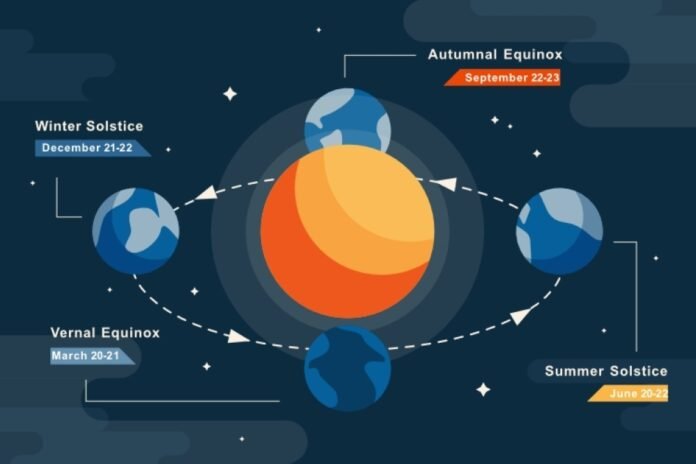
The Sultanate of Oman is set to mark the summer solstice on Sunday, June 21, the day that signals the longest period of daylight in the Northern Hemisphere and the official start of astronomical summer.
According to the Omani Society for Astronomy and Space, the phenomenon will occur at 12:24 p.m. Oman time, with the season expected to last just over 93 days.
Astronomy specialists explain that on this day, the sun reaches its highest position in the sky before daylight hours gradually begin to shorten again until the autumn equinox in September.
In Muscat, sunrise is expected at 5:20 a.m., with sunset at 6:56 p.m., resulting in more than 13 hours of daylight, making it the longest day of the year in the country.
Experts note that the summer solstice occurs due to the tilt of the Earth’s axis at approximately 23.5 degrees as it orbits the sun, rather than any change in distance between the Earth and the sun.
The event also marks the beginning of the Khareef season in parts of Dhofar Governorate, where monsoon winds bring cooler weather and seasonal cloud cover along the southern coast.
Astronomers add that during the solstice, the sun appears directly overhead along the Tropic of Cancer, a rare alignment that causes minimal shadow at midday in certain locations.
Officials describe the summer solstice as one of the key markers in the astronomical calendar, reflecting the natural cycle of seasons and the Earth’s movement around the sun.
