
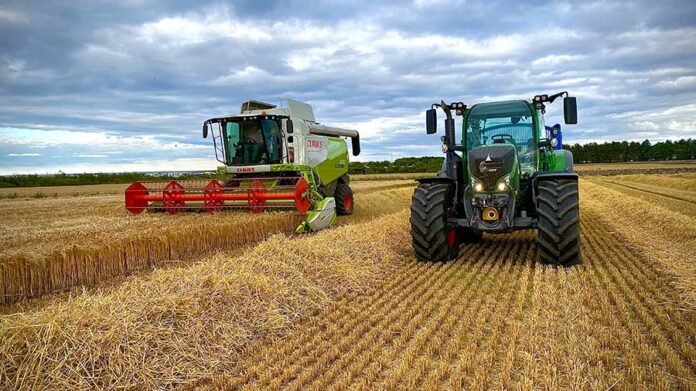
Farmers in Iraq’s Kirkuk province are being forced to harvest wheat crops earlier than planned due to increasing risks of field fires during the agricultural season, according to local accounts.
Agricultural areas in districts including Sargaran, Dibis, and Daquq have seen repeated fire incidents in recent weeks, damaging farmland and pushing farmers to begin harvesting before crops fully mature. The situation has raised concerns over food production losses in one of Iraq’s key wheat-growing regions.
A combine harvester operator, Mohammed Ali, said fear among farmers has grown significantly during the harvest period. In remarks reflecting the situation on the ground, Kirkuk farmers harvest crops prematurely amid fire risk has become a common reality as many prioritize saving part of their yield over waiting for full ripening.
He added that farmers often instruct workers to collect wheat as soon as possible to avoid potential fire damage, even if it reduces overall quality and output.
Local sources reported that large areas of farmland have been affected by fires in recent days, with farmers citing limited access to firefighting support and relying on basic tools to control spreading flames.
Beyond fire-related losses, farmers are also facing financial strain linked to pricing differences and agricultural policy restrictions in disputed areas between Baghdad and the Kurdistan Region.
Representatives from farming communities say that wheat purchased under official agricultural plans receives higher government-set prices compared to crops outside the system, creating economic pressure on those excluded.
The issue is further complicated by long-standing land disputes in Kirkuk, where competing administrative claims have affected farming rights and access to state support. These tensions trace back to historical land redistribution policies and remain unresolved in several areas.
The ongoing challenges have repeatedly disrupted agricultural cycles in northern Iraq, raising wider concerns about rural livelihoods and stability in key farming districts.