
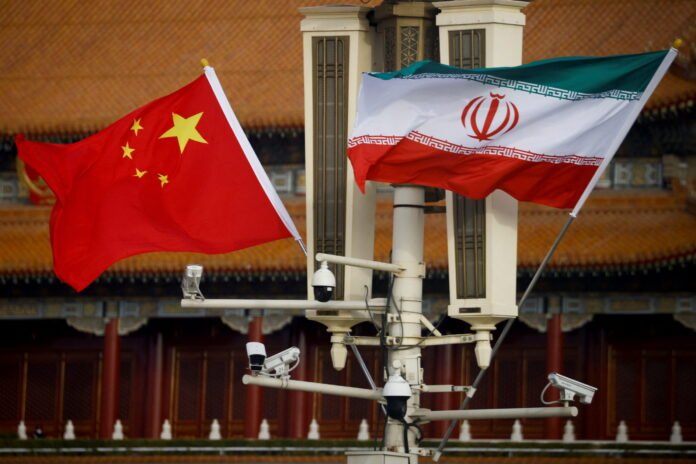
China is increasing diplomatic efforts to help reduce tensions surrounding the conflict involving Iran, Israel and the United States, according to a prominent Chinese analyst who says Beijing is relying on economic influence rather than military involvement to expand its regional role.
Huiyao Wang, president of the Center for China and Globalization think tank, said Chinese officials have intensified outreach to regional and international actors as instability continues to affect the Middle East and key global energy routes.
Speaking in an interview with Rudaw, Wang said Chinese Foreign Minister Wang Yi had held more than 30 calls with Gulf states, Arab countries, Iran, European officials, the United States and Russia in an effort to support dialogue and de-escalation.
The comments come as diplomatic efforts to secure a longer-term truce in the conflict remain fragile despite recent mediation attempts. Concerns over tensions in and around the Strait of Hormuz have also heightened fears of disruptions to global energy supplies and trade routes.
Wang argued that Beijing’s approach differs from Washington’s traditional regional role because it prioritises economic cooperation and trade partnerships over military deployment.
He said China views continued instability in the Middle East as harmful to its long-term interests, particularly given the region’s importance to energy imports and infrastructure projects linked to the Belt and Road Initiative.
According to the analyst, Beijing believes it can position itself as a neutral actor acceptable to multiple sides involved in the crisis, partly because of its economic relationships across the Gulf and broader Middle East.
He also dismissed suggestions that the situation represents a geopolitical contest between China and the United States, saying Beijing’s priority is restoring stability rather than expanding military influence.
The interview highlighted the growing importance of the Middle East in Chinese foreign policy, especially as Gulf states deepen trade, investment and technology ties with Asian economies.
Wang said China’s influence increasingly comes from economic leverage and global trade links, rather than direct security intervention, adding that Beijing sees peace and stable markets as essential for continued development across the region.
The discussion also touched on Iraq and the Kurdistan Region, where the analyst said China generally follows a policy of non-interference while continuing economic cooperation through state-level partnerships and infrastructure projects.
