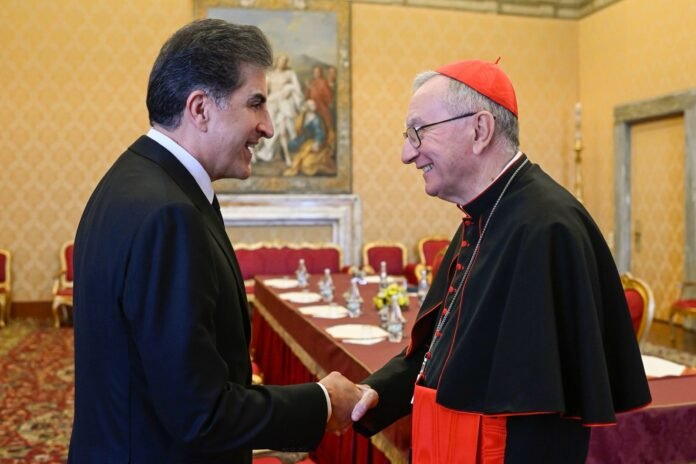
Kurdistan Region of Iraq President Nechirvan Barzani has met Pope Leo XIV at the Vatican, where he reaffirmed that Christians and other minority communities will continue to play a central role in shaping the region’s future amid wider instability in the Middle East.
During the meeting, Barzani stressed that Christians are an “essential part” of the region’s identity and history, according to a statement from the Kurdistan Region Presidency. He added that protecting their rights, dignity and long-term presence remains a key responsibility for local authorities.
The discussions come at a time when Iraq and neighbouring countries continue to face political tensions and security challenges, with religious coexistence and minority protection remaining sensitive issues across the region.
Barzani also expressed appreciation for the Vatican’s role in promoting interfaith dialogue and recalled Pope Francis’ historic 2021 visit to Iraq, which included a stop in the Kurdistan Region during a period of heightened regional instability.
The meeting highlighted longstanding ties between the Vatican and Kurdish leadership, particularly following the rise of ISIS in 2014, when the region hosted large numbers of displaced Christians, Yazidis and other minority groups fleeing violence in Mosul and surrounding areas.
Pope Leo XIV reportedly praised the Kurdistan Region for its record of coexistence and its hosting of displaced communities during conflict, describing it as a model of religious tolerance in the region.
Barzani also invited the pontiff to visit the Kurdistan Region in the future and presented symbolic gifts reflecting religious heritage and coexistence in the area.
On the sidelines of the visit, the Kurdish president also held talks with Vatican Secretary of State Cardinal Pietro Parolin, where both sides discussed regional developments, minority rights and continued cooperation between the Holy See and Iraqi authorities.
The talks further touched on broader Middle East tensions and humanitarian concerns, with both sides stressing the importance of dialogue and stability in a region still affected by ongoing geopolitical pressures.
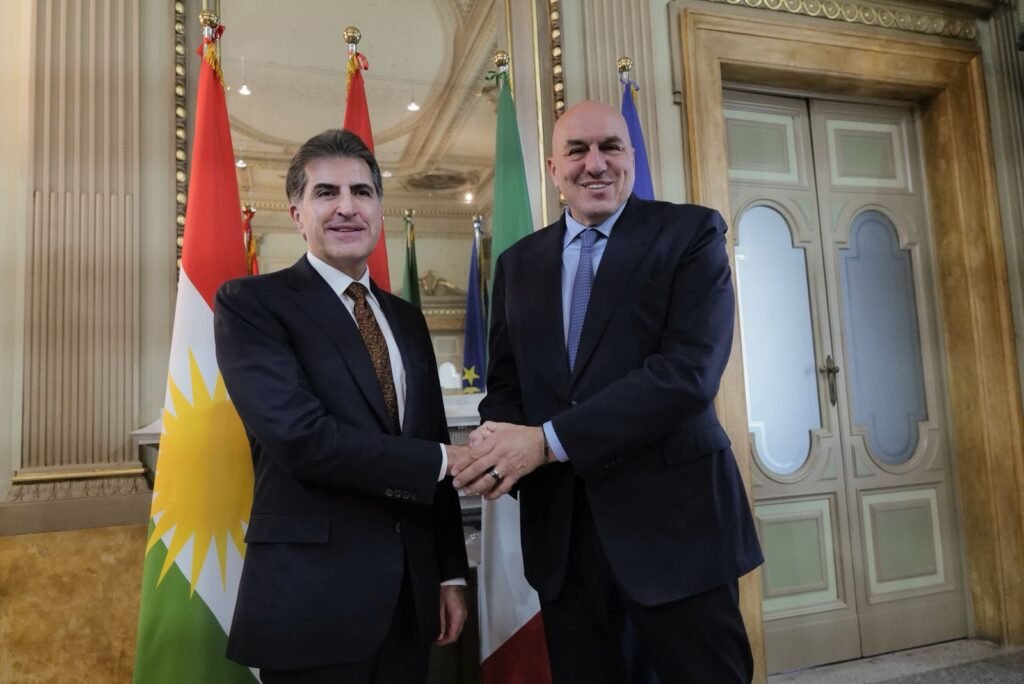
Separately, Barzani met Italian Defence Minister Guido Crosetto to discuss security cooperation and support for stability in Iraq. The Italian side reiterated its continued support for Iraqi and Kurdish security forces and ongoing cooperation in counter-terrorism efforts.
The Vatican visit underscores the Kurdistan Region’s continued diplomatic engagement with international partners, particularly on issues of religious coexistence, minority protection and regional security.