
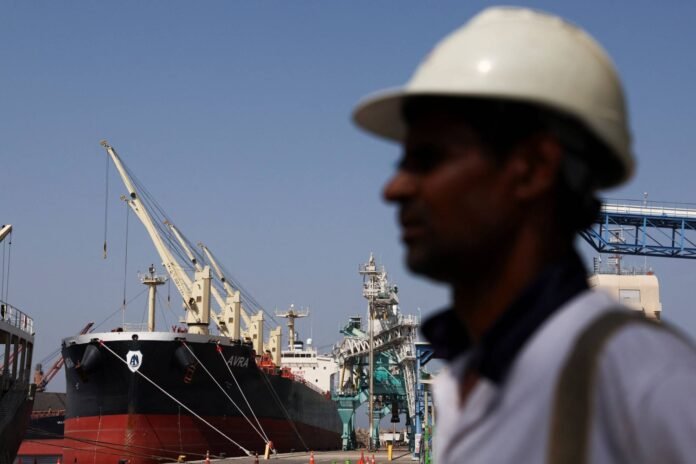
Ports along the eastern coast of the United Arab Emirates, particularly Fujairah and Khor Fakkan, have become central hubs for regional trade and energy flows as shipping routes in the Gulf face ongoing disruption, according to logistics data and industry officials.
At the Port of Fujairah, operations continued steadily this week, with bulk grain shipments being unloaded and crude oil transported through pipelines onto tankers docked along the quay. Nearby, Khor Fakkan Port has also seen increased activity, with container vessels and cargo traffic rising sharply.
The two ports, located on the UAE eastern coastline with direct access to the Indian Ocean, have taken on greater strategic importance following disruptions affecting maritime movement in the Strait of Hormuz, a key global shipping route.
Industry data indicates that crude oil exports through Fujairah have increased significantly in recent months, supported by pipeline infrastructure linking inland production fields to the port. Meanwhile, Khor Fakkan has experienced a dramatic surge in container handling volumes, reflecting its growing role as a regional logistics hub.
Shipping and logistics operators say the shift has made the eastern ports essential for maintaining supply chains into the UAE and wider Gulf region, particularly for goods that previously moved through western Gulf terminals.
However, the ports have also faced security concerns. Reports of attacks in the wider region, including incidents affecting energy infrastructure in Fujairah, have highlighted vulnerabilities in regional shipping and logistics networks. Officials and industry leaders continue to stress the importance of safeguarding maritime routes and maintaining freedom of navigation.
Despite tensions, shipping activity at both ports remains active. Data from vessel tracking services shows multiple container and cargo ships continuing to operate in and out of Fujairah and Khor Fakkan, although congestion has increased due to rerouted trade flows.
Logistics companies operating in the region report that, for now, there has been no major disruption to cargo movement, although they acknowledge that the situation remains sensitive and dependent on regional developments.
Khor Fakkan, operated by Gulftainer, has also seen a significant rise in operational capacity, with company officials noting sharp increases in both container throughput and truck movements compared with pre-crisis levels. The port has expanded its role from a transshipment hub into a key gateway for essential goods, including food and medical supplies.
Plans are also underway to develop additional logistics infrastructure inland, including a new dry port facility linked to Khor Fakkan to further streamline cargo handling and distribution.
Analysts say the UAE eastern ports have effectively reshaped regional trade routes, offering an alternative corridor for maritime commerce while underscoring the continued vulnerability of global supply chains to geopolitical tensions.
