
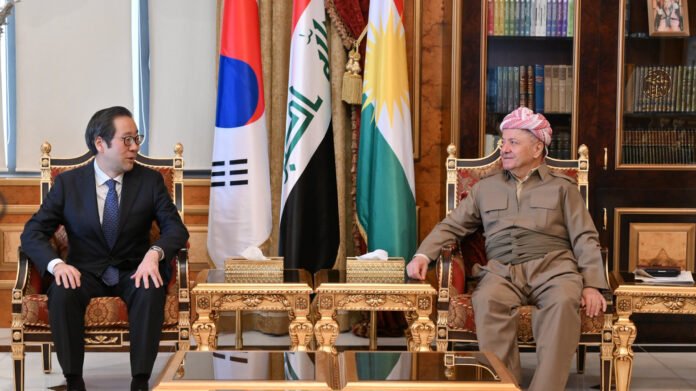
South Korea’s incoming ambassador to Iraq highlighted Iraq’s democratic progress during meetings with local leaders. He emphasized the need for a stable and efficient government. He also praised the recent elections as proof that Iraq’s democratic progress strengthens political institutions and benefits all communities.
Iraq held its 2025 legislative elections on November 9 and 11. Citizens turned out for both general and special ballots. The Independent High Electoral Commission announced final results, confirming that the Reconstruction and Development Coalition won 46 seats in the 329-member parliament. This result shows strong public engagement and underscores the legitimacy of the electoral process.
After the results, the Shiite Coordination Framework formed the largest bloc in parliament. This move positions the bloc to nominate the next prime minister. Analysts stress that forming a government quickly remains essential to maintain public trust.
Under constitutional rules, the new parliament must convene with a two-thirds quorum led by the eldest legislator serving as acting speaker. Parliament will then elect a speaker. Next, it will elect a president through a secret ballot. If no candidate secures a two-thirds majority in the first round, a simple majority in a runoff will decide. Afterward, the largest parliamentary bloc nominates a prime minister-designate to form the government.
During his visit, the ambassador met top officials in Erbil and discussed bilateral ties between Iraq and South Korea. He congratulated the Kurdistan Democratic Party for winning 26 seats in the new legislature. Leaders highlighted continued collaboration between Erbil, Baghdad, and Seoul in economic and diplomatic matters.
Experts note that timely government formation will strengthen Iraq’s institutions. It will also accelerate reforms promised in the electoral campaign. Foreign partners, including South Korea, monitor developments closely and encourage local leaders to focus on transparency and unity. They also see the elections as a milestone in Iraq’s democratic progress, reinforcing the country’s path toward stability and inclusive governance.
With the new parliament now set to convene, political parties face pressure to act decisively. Citizens and international partners hope the election results translate into a functional government, stronger institutions, and continued growth for Iraq.
