
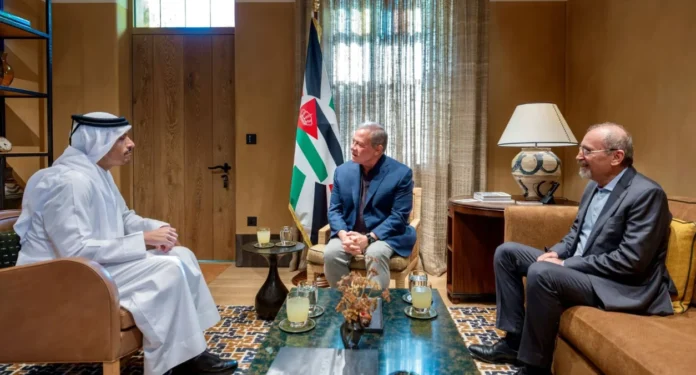
Qatar Jordan talks focused on strengthening bilateral relations, improving regional security and coordinating diplomatic responses to ongoing developments. Qatar’s Prime Minister and Minister of Foreign Affairs, Sheikh Mohammed bin Abdulrahman Al Thani, met Jordan’s King Abdullah II and Deputy Prime Minister and Foreign Minister Ayman Safadi on Wednesday. The meetings covered regional tensions, maritime security and efforts to support lasting peace.
During his meeting with King Abdullah, Sheikh Mohammed reviewed cooperation between the two countries. Both sides discussed ways to strengthen coordination as regional developments continue to affect security and stability. In addition, Sheikh Mohammed conveyed condolences from Qatar’s Amir, Sheikh Tamim bin Hamad Al Thani, following a deadly attack on a church in Jordan’s Karak governorate.
The attack occurred during a funeral at a Greek Orthodox church on Friday. Gunmen killed nine people, while the incident also left several others injured. Sheikh Mohammed expressed sympathy for the victims’ families and wished those injured a full recovery.
King Abdullah emphasized the importance of reducing regional tensions to protect Arab countries and restore stability. He also discussed developments in the occupied West Bank and Jerusalem during the meeting. Furthermore, the Jordanian king warned against continued unilateral Israeli measures affecting Palestinians.
The discussions highlighted the importance of diplomatic coordination amid persistent regional challenges. Both countries have emphasized cooperation on issues affecting their shared interests and wider regional stability. However, tensions across the region continue to place pressure on diplomatic efforts and security arrangements.
The Qatar Jordan talks also reflected the two governments’ interest in maintaining communication as developments unfold. Regular consultations can provide opportunities to exchange views, coordinate positions and explore diplomatic responses. Nevertheless, achieving lasting regional stability will require sustained engagement and progress towards comprehensive agreements.
Sheikh Mohammed also held separate discussions with Jordanian Deputy Prime Minister and Foreign Minister Ayman Safadi. Their meeting focused on regional developments and diplomatic initiatives aimed at addressing current challenges. Moreover, both officials discussed closer coordination to support security and stability across the region.
Qatar’s foreign minister reaffirmed Doha’s support for diplomatic efforts that protect freedom of navigation. He also stressed the need for a comprehensive agreement capable of delivering sustainable peace. These priorities connect maritime security with broader efforts to reduce tensions and establish lasting regional arrangements.
Freedom of navigation remains an important concern because maritime routes support international trade and energy transportation. Disruptions can affect commercial activity and increase uncertainty for countries that depend on regional shipping. Therefore, diplomatic engagement can help address shared security concerns and encourage cooperation between governments.
The meetings reinforced the importance both governments place on bilateral relations and regional consultation. Qatar and Jordan discussed security concerns alongside practical opportunities to strengthen cooperation. In addition, their discussions covered diplomatic efforts involving regional and international partners.
The Qatar Jordan talks took place amid continuing concerns over developments affecting Palestinians and wider regional security. Both governments highlighted diplomatic coordination as part of their response to these challenges. However, the meetings did not announce a specific new agreement or detailed implementation timetable.
Instead, the discussions emphasized continued communication, support for diplomatic initiatives and cooperation on shared concerns. Further developments will depend on diplomatic engagement and the wider regional situation. For now, Doha and Amman have reiterated their focus on coordination, maritime security and efforts to achieve lasting peace.
