
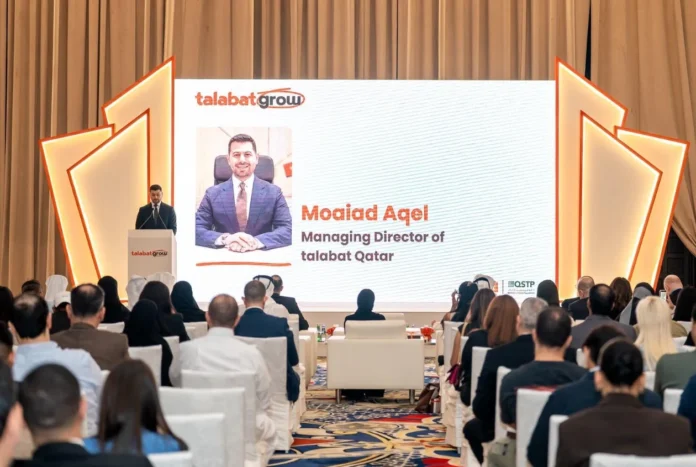
Talabat Grow has launched in Qatar to help 180 locally owned small businesses strengthen operations and achieve sustainable growth. The 12-month initiative combines commercial support, practical training and technology partnerships to help restaurants improve performance. Talabat developed the programme with Qatar Science & Technology Park (QSTP), which will connect participating businesses with potential technology solutions.
The launch event brought together local media representatives, restaurant partners and entrepreneurs to introduce the programme’s objectives. Through this invitation-only initiative, talabat plans to select businesses with strong potential for development. Participants will receive tailored guidance designed to address operational challenges and strengthen their competitiveness within Qatar’s food sector.
The programme begins with an intensive two-week training period, followed by personalised support throughout the remaining months. During this period, restaurant owners will learn to interpret performance data and make more informed business decisions. Additionally, talabat’s partner success teams will provide individual guidance on using digital tools effectively. Participants will also benefit from subsidised commission rates, offering commercial support as they work to improve their businesses.
QSTP will contribute its technology and innovation network to help restaurants explore solutions developed by local startups. The partnership aims to identify practical tools that could simplify everyday operations and potentially reduce business costs. Furthermore, participating restaurants may have opportunities to test promising technologies in real operating environments. These trials could help businesses assess whether new solutions improve efficiency and support future expansion.
Moaiad Aqel, managing director of talabat Qatar, said the country’s restaurant community includes ambitious businesses seeking opportunities to develop. He explained that the initiative would help restaurant partners understand their performance and adopt practical methods for sustainable growth. According to Aqel, stronger individual businesses can also contribute to the wider food ecosystem across Qatar.
Meanwhile, Ahmed Al-Said, QSTP’s business development director, highlighted the potential benefits of bringing technology closer to food businesses. He said practical innovation could help restaurants operate more efficiently while giving startups opportunities to test their products. Consequently, the collaboration could create value for both established restaurant operators and emerging technology companies.
The partnership also reflects a broader effort to connect entrepreneurship with digital innovation across Qatar’s business landscape. For participating restaurants, access to training and tailored guidance may help address challenges that limit growth. At the same time, technology trials could reveal opportunities to improve service delivery and manage resources more effectively.
Through Talabat Grow, the company aims to strengthen relationships with local restaurant partners over the long term. The programme’s results will depend on how effectively participants apply the guidance and solutions available to them. However, its combination of commercial assistance, business training and startup collaboration provides a structured approach to supporting small enterprises. The initiative will run for 12 months, with 180 locally owned businesses targeted for participation.
