
MENA startup funding gained momentum this week as companies across the Middle East and North Africa secured investments in fintech, healthcare, artificial intelligence and business technology. These deals highlight growing investor interest in digital services, regional expansion and products addressing practical business needs.
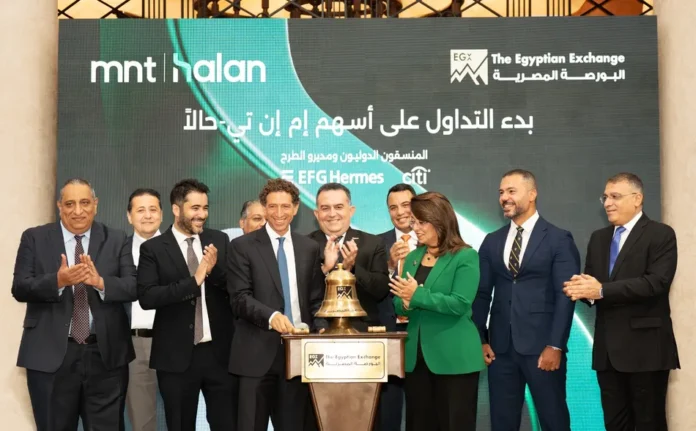
Egyptian fintech company MNT-Halan began trading on the Egyptian Exchange after completing an initial public offering of 320 million existing shares. The offering represented 20 percent of its issued capital. Moreover, institutional and private investors subscribed 11.2 times the available allocation, rising to 19.4 times without cornerstone investors. Retail demand proved even stronger, reaching 43.6 times the allocation and attracting over 41,500 subscription orders.
Founded by Mounir Nakhla, MNT-Halan provides lending, payments, investment and e-commerce services. By June 30, the company had served approximately 7.9 million customers and distributed more than 178 billion Egyptian pounds in financing.
Meanwhile, Kuwait-based consumer research startup theQA raised over $550,000 in pre-seed funding from a local family office and strategic angel investors. Founders Ahmad Al-Ebrahim and Hussain Al-Nashabah established the company in 2025. Its platform uses artificial intelligence to help businesses design surveys and reach specific audiences. Since April 2025, it has gathered more than 20,000 verified participants. The new funding will support expansion within Kuwait and improvements to its research tools.
In healthcare, UAE-based Vitalls secured a $1.5 million seed investment commitment from Singapore-based EST Growmore, which could provide another $1 million. The investor will anchor the funding round, while both companies explore distribution, product development and portfolio partnerships. Founded by Mehdi Bouchenak in 2023, Vitalls is building an AI-powered digital health passport. The platform aims to help patients store and share medical records across healthcare providers and countries.
US-based Databuddy Analytics also secured $500,000 in seed funding from Y Combinator. Founded by Palestinian entrepreneur Issa Nassar in 2026, the company develops AI software that identifies conversion losses, customer friction and product problems. Including earlier backing from Maza Ventures and the a16z Scout programme, its disclosed funding now exceeds $560,000. The investment will support deeper analytical capabilities, new integrations, targeted recruitment and customer onboarding.
Dubai-based CapQuest raised $1 million in pre-seed funding from Oraseya Capital and AMKM Family Office. Founded in 2023, the company helps businesses manage shareholder records, employee equity, vesting schedules, fundraising and investor communications. With customers in 11 countries, CapQuest plans to improve automation, strengthen its product and expand internationally.
Egyptian property technology startup Aqar Exit received $200,000 from businessman Ayman Mamdouh Abbas for a 10 percent stake. The deal values the company at approximately $2 million after investment. Founder Mahmoud Ammar launched the platform in July to help buyers transfer property-purchase contracts when instalments become unaffordable. The company intends to develop additional products, enter Gulf markets and pursue a $5 million funding round in 2027.
Elsewhere, Egypt-based Tactful AI attracted an undisclosed investment from former e& Group CEO Hatem Dowidar. The investment extends its pre-Series A round, which Foras AI and M Empire jointly led in February. Founded by Mohamed El-Masry and Mohamed Hassan, Tactful builds AI infrastructure for customer experience. The company plans to introduce tools for creating enterprise workflows with human oversight before pursuing Series A funding in 2027.
UAE healthtech company Nabta Health secured further backing from Phoenix Venture Partners, which led the second closing of its ongoing $3 million pre-Series A round. Although the latest investment amount remains undisclosed, the financing will support commercial growth, customer acquisition and partnerships. Founded by Sophie Smith, Nabta combines preventive screening, AI-supported navigation and clinical care, particularly for women’s health.
Saudi fintech startup Vrtx raised $3.6 million in pre-seed funding from several investors, including SC Ventures, Sadu Capital, BYLD, Suhail Ventures, F6 Ventures, TAZ Investment and Palm Ventures. Founders Mishal Bin Slimah and Omar Shaaban are developing infrastructure for digital wallets, cards, payments, payouts and customer verification. The company has received in-principle approval from the Saudi Central Bank for an electronic money institution licence. However, its platform must receive the necessary regulatory approval before targeting businesses in fintech, logistics and human resources.
Creative technology also attracted capital, as UAE-based Popcorn Studio AI secured $1 million in pre-seed funding led by Emirati investor Mohammed Bin Bouta Al-Harsoosi. Egyptian founders Shady Essam and Mohamed Hedar established the company in 2026. Its platform combines AI tools for scripts, characters, scenes, voiceovers, lip-syncing and post-production, including Arabic dialect support. The investment will support technology development and expansion across the UAE, Saudi Arabia and Egypt.
Finally, Saudi event-technology company INVE raised $300,000 in pre-seed funding from Outliers Venture Capital. Founder Abdulrahman Al-Abdulkarim developed the original invitation and RSVP tool for his sister’s wedding. Since then, INVE has expanded into business software that manages guest profiles, sends branded communications and issues digital entry passes. The company says its consumer product has supported 250 events and more than 35,000 invitations. It plans to grow across Saudi Arabia and the Gulf while targeting the meetings, conferences and exhibitions market, which it estimates could reach $5.65 billion by 2031.
Together, these transactions demonstrate the breadth of MENA startup funding, spanning financial services, healthcare, property, event management and AI-powered business tools. Although the companies operate in different markets, many share a focus on automation, stronger customer experiences and expansion beyond their home countries.
