
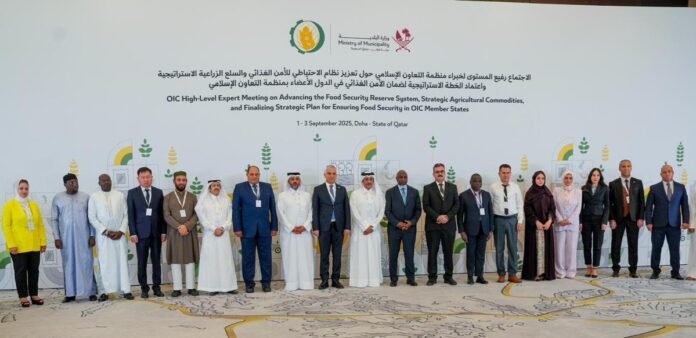
Qatar has hosted a three-day meeting for the Organisation of Islamic Cooperation (OIC) to strengthen sustainable food systems. Experts, officials, and representatives from member states gathered in Doha to finalize the OIC Food Security Strategic Plan for 2026–2035. The discussions emphasized a unified vision for building resilient food systems in OIC nations.
The meeting aimed to enhance cooperation and ensure collective progress on food security. However, officials stressed that stronger agricultural policies and shared resources would help the OIC community address rising challenges. The plan focused on strategic commodities, a joint food reserve system, and capacity-building programs. These priorities are designed to strengthen resilient food systems across the Islamic world.
During the opening session, Qatar’s Ministry of Municipality underlined the importance of collaboration. The Assistant Undersecretary for Agriculture and Food Security Affairs highlighted that the event reflected a shared commitment to food security. He noted that the plan represents a roadmap for implementation, not just a theoretical framework.
Speakers explained that this initiative reflects Qatar’s role as chair of the 9th Ministerial Conference on Food Security and Agricultural Development. Doha previously hosted the conference in 2023, further demonstrating the country’s leadership in promoting sustainable policies.
Dr. Ahmad Kawesa Sengendo, OIC Assistant Secretary-General for Economic Affairs, praised Qatar and the Islamic Organization for Food Security for organizing the meeting. He stressed that the discussions were critical given global disruptions in food supply chains. Rising costs, shortages, and conflicts have made cooperation even more urgent for many OIC states.
Participants also acknowledged that agriculture plays a vital role in member state economies. In some countries, agriculture contributes up to 60 percent of GDP. For others, more than 70 percent of the population depends on agriculture for survival. Strengthening systems therefore ensures both stability and livelihoods.
Ambassador Yerlan Baidaulet, Director-General of the Islamic Organization for Food Security, outlined five pillars of the strategic plan. These include model support centers, stronger food industries, resource mobilization, intra-OIC trade, as well as capacity building. He emphasized that these measures aim to create integrated and sustainable frameworks for future generations.
By the end of the meeting, participants reaffirmed their commitment to achieving progress. The adoption of the strategic plan demonstrates a united effort to secure food supplies and build resilient food systems for nearly two billion people across the OIC.
