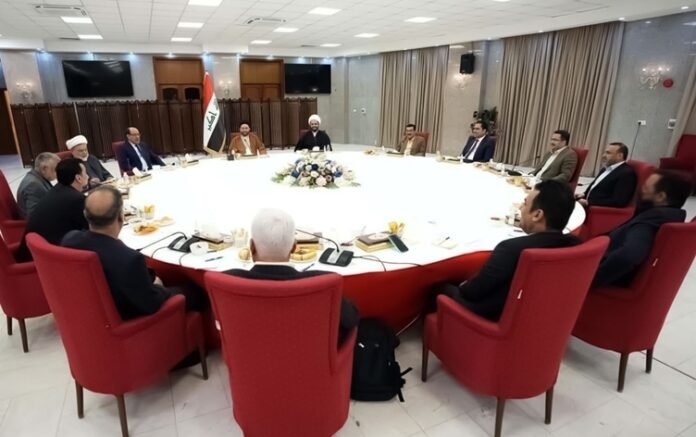
Iraq’s dominant political coalition has formally requested that the two main Kurdish parties settle their disagreement over a joint candidate for the presidency. The Coordination Framework, a coalition of Shiite political groups, issued this call on Monday in Baghdad. This development marks a significant effort to break the lengthy political deadlock gripping the nation. Lawmakers have failed to elect a new president for several months.
The country held its parliamentary elections back in November of last year. Since that time, various political factions have struggled to form a new government. Disputes between the different parties have consistently blocked the necessary votes in parliament. The position of the presidency has remained vacant as a result. This vacuum prevents the appointment of a new prime minister as well.
Iraq operates under an informal power-sharing agreement established after 2003. This arrangement allots the presidency specifically to a Kurdish official. The position holds significant symbolic weight but has limited executive authority. Two major Kurdish parties are now competing for this influential post. The Kurdistan Democratic Party, known as the KDP, and the Patriotic Union of Kurdistan, or PUK, secured the majority of Kurdish votes in the election.
The Coordination Framework expressed its deep concern over the current situation. The coalition stated its desire to protect the constitutional rights of all components. It specifically urged the KDP and PUK to find common ground quickly. The statement highlighted the need to maintain unity within the larger political process. Participants emphasized the trust that voters placed in them during the election.
Political negotiations have intensified in recent days behind closed doors. The selection of a president is a critical first step for the government formation. Following the presidential vote, the new head of state will name a prime minister. The prime minister nominee must then form a cabinet and secure parliamentary approval.
The Kurdish parties have so far failed to unify behind a single candidate. The PUK has historically held the presidency for nearly two decades. The party argues that this post remains its exclusive political right. Conversely, the KDP rejects this claim of exclusive entitlement. The KDP has reportedly offered other high-level federal positions to the PUK. This offer would exchange control of the presidency for different powerful roles.
The delay in selecting a president has stalled other essential government functions. Parliament convened in December to elect its speaker and deputies. According to the constitution, the president must be elected within thirty days. That constitutional deadline has long since passed without any resolution. The current impasse leaves the country in a state of political uncertainty.
The Coordination Framework’s public statement applies new pressure on the Kurdish leaders. The Shiite coalition holds the largest number of seats in the Iraqi parliament. Its support remains essential for any new government to receive a vote of confidence. Therefore, its call for a resolution carries significant political weight. The coming days will prove crucial for negotiations between Erbil and Sulaimaniyah.
Observers note that a unified Kurdish position is necessary to move forward. The Coordination Framework prefers to deal with a consensus candidate from the region. A divided Kurdish front complicates the negotiations for the Shiite coalition. It also delays the selection of a candidate for prime minister. All major political blocs want to avoid a prolonged constitutional crisis.
The political process in Iraq often requires extensive compromise and patience. The current stalemate represents one of the longer delays in recent years. Finding a resolution for the Kurdish presidential candidate remains the immediate priority. Success here will unlock the subsequent steps for forming a new government. The nation waits to see if the Kurdish parties can reach a historic agreement.