
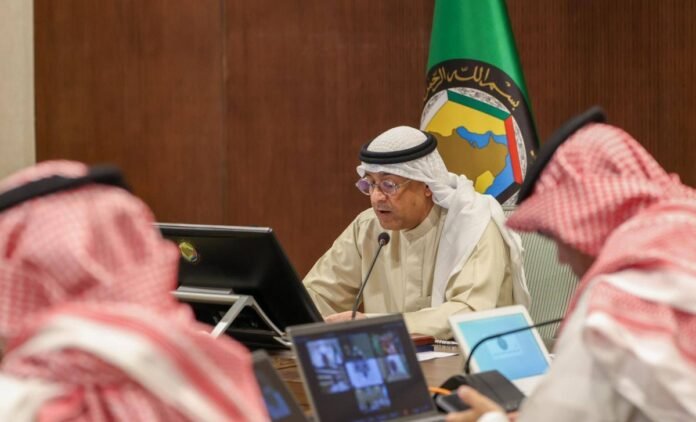
Gulf economic integration strategy defines the latest direction of cooperation across the GCC. Gulf economic integration strategy took center stage during a high-level virtual meeting of Gulf officials. The discussions involved members of the Gulf Cooperation Council under the leadership of Secretary-General Jasem Al-Budaiwi.
The meeting took place with participation from ministers responsible for economic and development affairs across member states. It focused on strengthening coordination among Gulf countries. Moreover, officials reviewed how to respond to growing regional and global economic pressures. The discussions highlighted the need for faster and more practical cooperation mechanisms.
Al-Budaiwi stressed that the region faces complex geopolitical and economic challenges. He noted that these developments require stronger alignment between Gulf states. In addition, he called for moving beyond basic coordination toward deeper integration. He emphasized that Gulf economic integration strategy remains essential for protecting long-term stability.
Officials also reviewed the impact of recent global uncertainty on regional markets. Energy shifts, trade disruptions, and political tensions continue to influence economic planning. Therefore, ministers discussed ways to improve resilience across key sectors. They also highlighted the importance of maintaining stable supply chains and financial systems.
Furthermore, the GCC Secretariat reported more than 50 coordination meetings since the start of recent crises. These meetings covered multiple areas of joint Gulf action. As a result, officials pointed to strong institutional readiness among member states. They also expressed commitment to unified responses to emerging challenges.
In addition, the meeting emphasized the role of ministerial committees in shaping economic policy. These committees continue to align strategies across member countries. Gulf economic integration strategy was highlighted again as a guiding framework for future cooperation. Officials said it helps strengthen adaptability and reduce crisis impact.
Meanwhile, Arab foreign ministers also held a separate emergency session. They discussed recent regional security developments and coordinated diplomatic responses. However, Gulf officials maintained focus on economic stability and development priorities. This dual approach reflects the region’s broader effort to balance security and growth.
The discussions concluded with calls to accelerate joint Gulf initiatives. Ministers agreed that deeper integration will improve competitiveness and resilience. They also stressed the importance of building a flexible economic system.
Gulf economic integration strategy continues to shape the region’s long-term vision. It remains central to efforts aimed at strengthening cooperation, stability, and sustainable growth across GCC states.
