
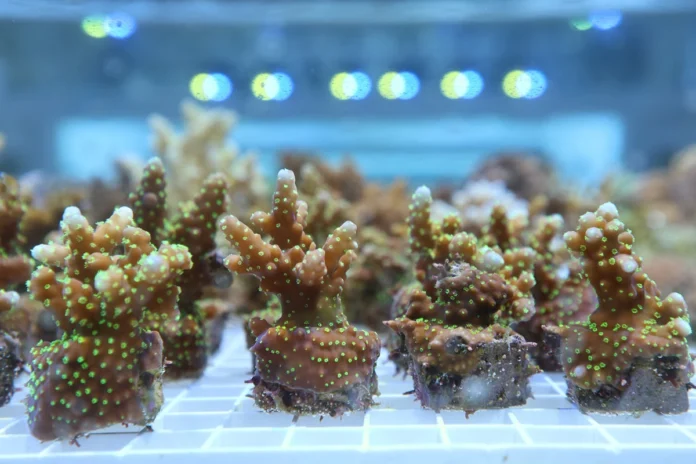
Saudi Arabia has launched a major Coral Restoration facility on its Red Sea coast, supporting efforts to protect threatened marine ecosystems. King Abdullah University of Science and Technology (KAUST) opened the centre with ambitious targets for rebuilding damaged reefs.
The facility aims to produce up to 360,000 corals annually as part of a wider restoration programme. By 2030, the university plans to restore 100 hectares of reef around Shushah Island. The initiative also aims to transplant more than two million corals and establish a resilient reef ecosystem by 2040.
KAUST announced the facility’s opening during the COP31 climate conference in Antalya, Türkiye. The university describes the centre as the world’s largest facility dedicated to coral restoration.
The project arrives amid an escalating global crisis affecting coral reefs. Between 2023 and 2025, the fourth global coral bleaching event affected more than 84% of the world’s reef areas. Scientists have identified it as the most extensive bleaching event recorded.
Furthermore, researchers warn that a strong El Niño weather pattern could intensify marine heat stress through early 2027. Rising ocean temperatures and prolonged marine heatwaves continue threatening vulnerable coral ecosystems worldwide.
Red Sea research offers new opportunities
KAUST considers the Red Sea particularly valuable for coral research because its reefs survive unusually warm and salty conditions. Scientists believe these naturally resilient species could help develop protection strategies for reefs elsewhere.
The initiative combines local coral diversity with the university’s marine science expertise. Researchers aim to develop methods for cultivating corals at scale and preparing them for warmer ocean conditions before transplantation.
The programme also works with the Coral Research and Development Accelerator Platform. This international initiative supports scientific and technological solutions for protecting and restoring coral ecosystems.
Artificial intelligence supports restoration work
The KAUST Coral Restoration Initiative combines four major components to support its research and operational targets. These include a large land-based nursery, underwater nurseries, more than 50 research programmes and an artificial intelligence monitoring system.
Research areas include coral probiotics, heat-resistant species, robotics and AI-based modelling. Additionally, the initiative uses eCoral, a digital twin technology that helps researchers understand reef conditions.
The system supports decisions about where to transplant corals and how to monitor their development. Consequently, researchers can use detailed information to guide restoration activities and assess progress.
KAUST distinguished professor Carlos Duarte, who also leads CORDAP, described the initiative as an important opportunity for marine conservation. He said the facility could provide a model for similar restoration projects internationally.
Developing Saudi marine science expertise
The project also aims to strengthen Saudi Arabia’s scientific workforce through practical research and specialist training. Saudi scientists, divers and aquarists are developing skills in coral cultivation, marine biology and reef restoration.
Ian Campbell, senior vice president of KAUST’s National Transformation Institute, described the opening as one milestone. He said the project’s success would depend on measurable restoration results, local expertise and international scientific contributions.
Meanwhile, Amr Atiah, KAUST’s vice president of campus and community and former KCRI special projects director, highlighted opportunities for young Saudis. He expressed encouragement about growing interest among young people in marine science and environmental careers.
Protecting marine ecosystems for future generations
Coral reefs provide essential habitats for approximately one-quarter of all marine species worldwide. They also protect coastlines from storms and support the livelihoods of more than 500 million people.
Through its Coral Restoration programme, KAUST hopes to rebuild the Red Sea ecosystem while developing methods other countries can adopt. The university is also collaborating with international partners to protect coral diversity for future generations.
The initiative therefore combines environmental protection, scientific research and workforce development within one long-term programme. Its progress towards the 2030 targets will help demonstrate whether large-scale restoration can strengthen vulnerable reefs.
