
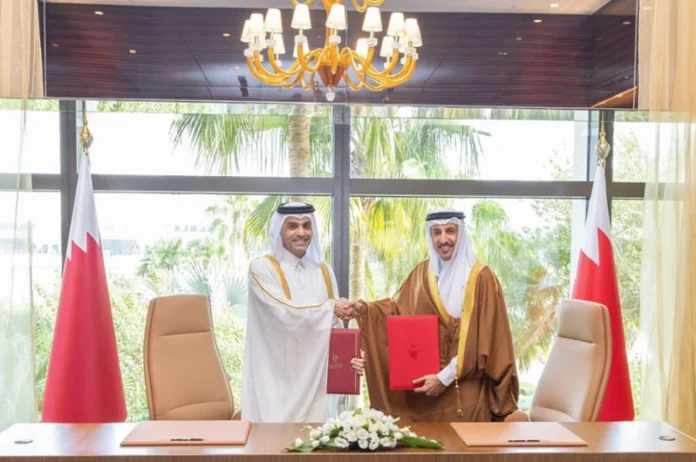
Qatar and Bahrain have agreed to expand Transport Cooperation through a new memorandum of understanding covering land transport and logistics services. The agreement aims to improve regional connectivity while supporting more integrated and sustainable transport networks.
The two countries signed the memorandum during the 30th meeting of Gulf Cooperation Council transport and communications ministers in Bahrain. Qatar’s Minister of Transport Sheikh Mohammed bin Abdullah bin Mohammed Al-Thani and Bahrain’s Minister of Transportation and Telecommunications Shaikh Abdullah bin Ahmed Al-Khalifa represented their respective countries.
The agreement establishes several areas for joint work across the transport sector. These include improving road safety systems, developing technical standards and coordinating regulations. Additionally, both countries intend to conduct research into emerging trends affecting transportation and logistics.
A central objective involves creating a more integrated land transport system. Both governments also want future infrastructure and services to support environmental sustainability. Therefore, the memorandum encourages cooperation on practical solutions that improve mobility between the two countries.
The agreement also explores opportunities to develop road and railway connections. In particular, Qatar and Bahrain will consider how these links could connect with the wider GCC Railway Project. Such connections could eventually support the movement of passengers and goods across the region.
Beyond traditional infrastructure, the memorandum addresses public transport and modern technology. Cooperation will include metro systems, railway networks and logistics services. Furthermore, both countries plan to explore artificial intelligence and smart technologies to improve transport operations and service quality.
The agreement also encourages technical exchanges between officials and specialists. Both sides intend to organise expert visits, official delegations and joint research activities. These exchanges will allow professionals to share practical experience and knowledge across different transport fields.
Moreover, the memorandum covers cooperation on technical specifications, policies and legislation. It also includes regulatory frameworks, standards and the exchange of relevant information and data. Both countries can use these exchanges to support more consistent approaches to transport development.
The agreement comes as GCC members advance their broader regional railway plans. On November 8, the six member states signed a general agreement establishing a framework for connecting their national railway networks. The initiative aims to make cross-border passenger and freight transport easier.
According to the latest 2026 progress figures from the GCC Railways Authority, the planned network has reached 55.92% completion. The network will extend 1,768 kilometres across the six GCC countries. Officials currently target full completion and operation by December 2030.
Qatar’s Minister of Transport Sheikh Mohammed bin Abdullah bin Mohammed Al-Thani said the memorandum reflects both countries’ commitment to stronger partnerships. He added that closer coordination would serve shared interests and support regional connectivity.
Al-Thani also highlighted Qatar’s willingness to work with other GCC members. He emphasised innovative solutions and modern technologies as important tools for developing efficient transport systems. These efforts, he said, can support mobility, trade and wider economic development.
Meanwhile, Bahrain’s Minister of Transportation and Telecommunications Shaikh Abdullah bin Ahmed Al-Khalifa highlighted the value of exchanging expertise. He said the agreement creates opportunities to share knowledge across public transport, metro and railway networks. It also covers logistics services and sustainable transport solutions.
Overall, the memorandum gives Qatar and Bahrain a framework for deeper Transport Cooperation. Its implementation will focus on technical exchanges, infrastructure development and smarter transport services. Additionally, the agreement complements wider GCC efforts to improve regional mobility and economic connections.
