
The GCC economic momentum shapes regional discussions, and leaders continue to highlight its global influence. The GCC economic momentum also strengthens cooperation and builds confidence among international partners. Moreover, the GCC economic momentum encourages deeper integration across the Gulf.
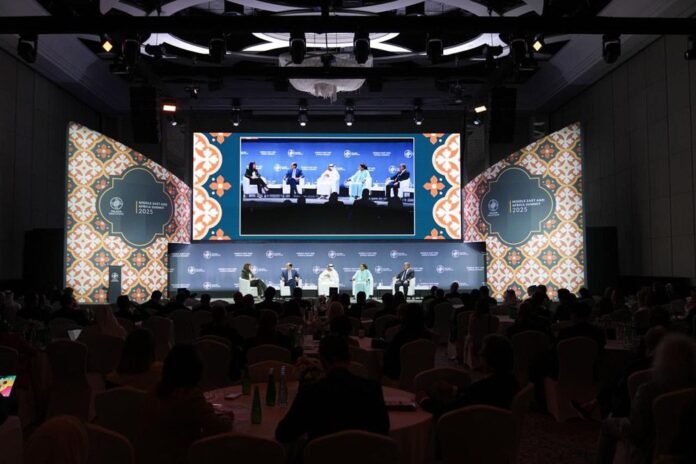
Abu Dhabi hosted the seventh Milken Institute Middle East and Africa Summit, and the opening session focused on innovation, partnerships, and growth. Delegations from several countries attended the event, bringing ministers, experts, and senior officials under one roof. Energy, finance, and technology leaders exchanged ideas to support a stronger regional economy.
Jassim Mohammed Al-Budaiwi opened the session with strong remarks about Gulf progress. He highlighted the region’s strategic location and showed how it supports global trade routes. Political stability across the Gulf also reinforces investor confidence and attracts major partnerships. Economic foundations continue to grow, and integration projects create stronger long-term opportunities.
Gulf reforms push the region toward a more sustainable future. These reforms also encourage investors to explore new sectors beyond oil. According to Al-Budaiwi, the GCC economy reached about $2.3 trillion in 2024. This figure places the region ninth globally and reflects major progress. Non-oil sectors now contribute more than 76% of GDP, which shows the success of diversification plans.
Financial indicators also demonstrate strong momentum. Market capitalization across the region exceeds $4.2 trillion. Banking assets now total nearly $3.5 trillion. Reserves reached close to $800 billion and continue to grow steadily. Sovereign wealth funds across the Gulf now hold more than $4.8 trillion.
Trade cooperation remains a major priority. Gulf states continue negotiating free trade agreements to expand economic opportunities. New agreements aim to increase trade flows and support wider access to global markets. Growing trade networks also help reduce prices for consumers and encourage stronger competition.
Artificial intelligence formed a key part of the discussion. Gulf countries now view AI as a critical engine of future transformation. New guidelines support ethical practices across AI development. Frameworks also organize AI applications in public services, climate forecasting, and disaster management. In December 2025, the GCC will adopt a unified AI strategy to guide upcoming progress.
