
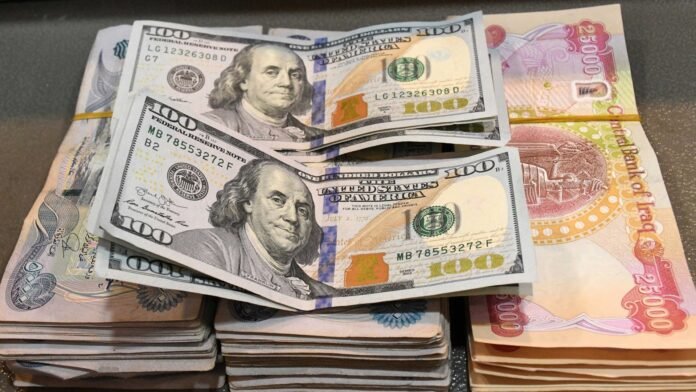
Dollar Rate movements intensified across Iraq on Wednesday as a revised official exchange rate took effect. The US currency climbed sharply in Baghdad and Erbil, while parallel-market trading showed significant volatility.
In Baghdad, the dollar reached 168,500 Iraqi dinars per $100 at major central exchanges. The latest figure represented a substantial increase from Tuesday’s rate of 159,800 dinars. The movement reflected immediate market reactions following Iraq’s introduction of revised official exchange rates.
The dollar also traded at different levels among exchange shops across Baghdad. Sellers offered the currency for 169,000 dinars per $100, while buyers paid 168,000 dinars. Consequently, trading rates varied depending on whether customers wanted to purchase or sell dollars.
The latest movement affected both major exchange locations and individual currency dealers. Market activity remained volatile as traders adjusted to the new official framework. Some exchange shops also suspended dollar sales amid uncertainty surrounding the rapidly changing parallel-market rates.
Erbil experienced a similar movement during Wednesday’s trading session. Exchange markets in the Kurdistan Region recorded dollar selling rates of 168,200 dinars per $100. Meanwhile, buyers offered approximately 168,100 dinars for the same amount.
The differences between buying and selling prices remained relatively narrow in Erbil. However, the overall dollar level represented a sharp movement compared with previous market conditions. Traders continued monitoring developments as the revised exchange system began influencing currency transactions.
Dollar Rate changes followed a decision by Iraq’s Cabinet on Tuesday to introduce new official exchange levels. The government approved several rates covering transactions involving the Finance Ministry, banks, and financial institutions. These rates established different values depending on the type of dollar transaction.
Under the revised framework, purchases from the Finance Ministry use an official rate of 1,500 dinars per dollar. Banks and non-bank financial institutions use a rate of 1,520 dinars when selling dollars to end users. The government therefore established separate official levels for different categories of transactions.
The new rates represent a significant difference from prices recorded in Iraq’s parallel market. Exchange shops in Baghdad and Erbil continued quoting substantially higher prices than the official levels. This gap contributed to heightened volatility as the revised system came into effect.
Meanwhile, traders continued adjusting their prices according to market conditions throughout Wednesday. The sharp movement encouraged some exchange businesses to temporarily halt dollar sales. Such decisions reflected uncertainty over where the market would settle after the official changes.
The Baghdad market recorded one of the strongest reported movements during the session. The dollar rose from 159,800 dinars per $100 on Tuesday to 168,500 dinars. That increase represented a significant one-day change in the quoted parallel-market price.
Erbil’s market also recorded higher dollar prices, although its quoted rates remained slightly below Baghdad’s levels. Exchange shops reported selling the currency at 168,200 dinars per $100. Buying rates reached 168,100 dinars, creating a small difference between both sides.
Dollar Rate developments therefore remained central to currency trading across Iraq on Wednesday. Baghdad and Erbil both experienced higher market prices following the government’s revised official framework. Exchange businesses continued responding to changing demand and rapidly shifting quotations.
The government’s new structure distinguishes between several types of official dollar transactions. The Finance Ministry will use the lower 1,500-dinar rate for its dollar purchases. Meanwhile, financial institutions will apply the 1,520-dinar rate when selling dollars to final customers.
These official rates differ considerably from the prices currently quoted by parallel-market exchanges. As a result, traders and customers faced different dollar values depending on the market. The gap also contributed to uncertainty among exchange businesses during the transition.
The latest market figures also highlighted differences between Baghdad and Erbil. Baghdad recorded a selling price of 169,000 dinars per $100 at exchange shops. Erbil reported a lower selling rate of 168,200 dinars for the same amount.
Both markets nevertheless showed strong dollar gains during Wednesday’s trading. The changes followed the government’s decision to implement new official exchange rates. Traders therefore continued watching market movements for signs of greater stability.
For customers, the changing rates created different costs depending on where they purchased dollars. Exchange shops adjusted their prices as market conditions shifted throughout the day. Some businesses also limited sales while assessing the impact of the revised official framework.
The Dollar Rate now remains a closely watched indicator across Iraq’s currency markets. Baghdad and Erbil both recorded substantial increases after the new official rates took effect. Market participants will continue monitoring whether the current volatility persists in subsequent trading sessions.
The latest figures show a clear difference between Iraq’s official exchange rates and parallel-market quotations. Government transactions now follow the newly approved rates, while exchange shops continue responding to market conditions. Further trading activity will indicate how the market adjusts to the new exchange-rate structure.
