
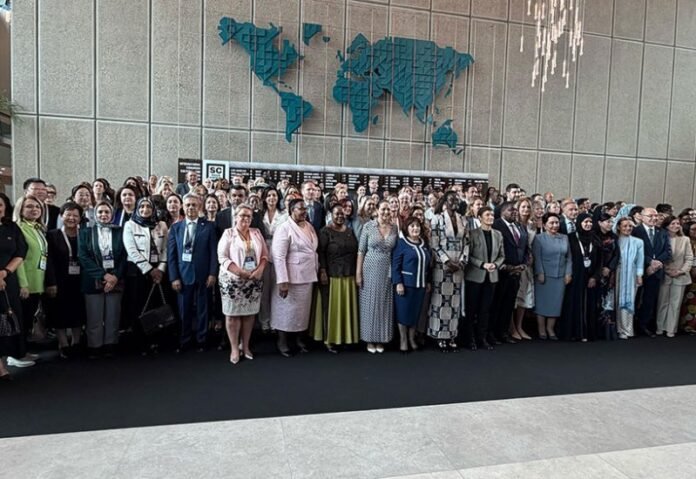
The participation of Bahrain’s parliamentary delegation in the 2026 World Conference of Women Parliamentarians in Belgrade reflects a broader Gulf trend toward using parliamentary diplomacy as a complementary tool to traditional state diplomacy.
The conference, organized by the Inter-Parliamentary Union in cooperation with Serbia, brought together lawmakers from dozens of countries under the theme of advancing gender equality and addressing social barriers facing women in politics.
For Bahrain, however, the event carried significance beyond discussions on women’s political participation. The meetings held on the sidelines of the conference highlighted Manama’s efforts to expand bilateral engagement with Eastern and Central European partners through legislative and institutional channels.
The Bahraini delegation stressed the importance of strengthening parliamentary cooperation with Serbia, including proposals to establish parliamentary friendship groups and expand dialogue on political, economic and cultural matters. Such initiatives are increasingly being used by Gulf states to reinforce diplomatic ties outside formal executive-level negotiations.
Analysts note that parliamentary diplomacy has become more visible globally in recent years, particularly through platforms linked to the Inter-Parliamentary Union, which represents 183 national parliaments worldwide. The organization has expanded its focus beyond legislative exchange to include conflict prevention, multilateral dialogue, democratic governance and gender representation.
The Belgrade conference itself reflects growing international attention on women’s representation in political institutions. According to IPU data, women currently account for around 27 percent of parliamentarians worldwide, while representation among younger women lawmakers remains considerably lower.
Serbia’s hosting of the event also carries diplomatic value. Belgrade positioned the conference as a major international parliamentary gathering, welcoming hundreds of participants from more than 60 countries, including delegations from Gulf states, Europe, Asia and Africa.
For Bahrain, participation aligns with its wider foreign policy approach of emphasizing dialogue, coexistence and international cooperation. Bahraini officials repeatedly highlighted themes of tolerance and interfaith coexistence during discussions with Serbian counterparts, reinforcing the kingdom’s efforts to project a moderate diplomatic image internationally.
The conference agenda additionally focused on combating online misinformation targeting women politicians, promoting gender-sensitive parliamentary systems and increasing youth participation in democratic institutions. These themes have become central topics within international parliamentary organizations as governments confront growing political polarization and digital disinformation challenges.
While no major bilateral agreements were announced during the meetings, the discussions demonstrated Bahrain’s intention to deepen parliamentary engagement with Serbia and broaden its diplomatic outreach in Europe through institutional cooperation rather than solely through economic channels.
