
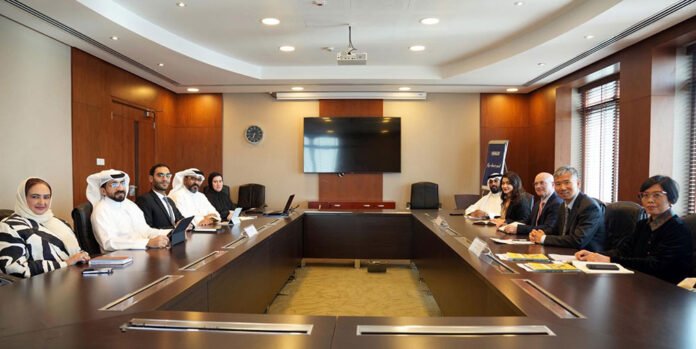
Bahrain strengthens road infrastructure as the Ministry of Works meets with the CEO of the Multilateral Centre for Development Finance. This meeting highlights how Bahrain strengthens road infrastructure through strategic international partnerships and technical cooperation. Moreover, it reflects the Kingdom’s commitment to improving urban connectivity and project quality.
Engineer Ahmed Sami Al-Tajer, Assistant Undersecretary for Roads at the Ministry of Works, emphasized the importance of exchanging expertise in road networks. He explained that collaboration with the Multilateral Centre for Development Finance ensures projects meet the best international standards. Furthermore, he praised the Centre’s initiatives to enhance connectivity and investment quality across the region.
During the discussions, the current road projects in Bahrain received detailed attention. The meeting also reviewed upcoming projects planned for the next phase of development. These projects aim to increase the efficiency of the road network while supporting urban growth. Additionally, officials highlighted government programs designed to upgrade transportation infrastructure comprehensively.
The collaboration focuses on enhancing project planning, technical expertise, and investment efficiency. Engineers and planners from both sides shared strategies for long-term improvement. They discussed ways to reduce delays and maintain high-quality construction standards. As a result, these efforts ensure that Bahrain strengthens road infrastructure sustainably and effectively.
Officials also addressed the economic and social benefits of improved road networks. Better roads facilitate smoother traffic, reduce travel time, and boost trade connectivity. Moreover, enhanced infrastructure supports local businesses and attracts international investors. Therefore, investing in roads contributes directly to Bahrain’s economic development.
The Ministry of Works reaffirmed its commitment to strategic partnerships. Collaborations like this enable knowledge transfer and promote innovative solutions. They also allow Bahrain to benchmark its projects against global standards. Consequently, these initiatives strengthen the Kingdom’s position in regional infrastructure development.
Bahrain strengthens road infrastructure with a clear vision for urban development. Continuous international cooperation, technical excellence, and investment quality remain central to this strategy. The Kingdom looks forward to achieving long-term improvements in transportation and connectivity.