
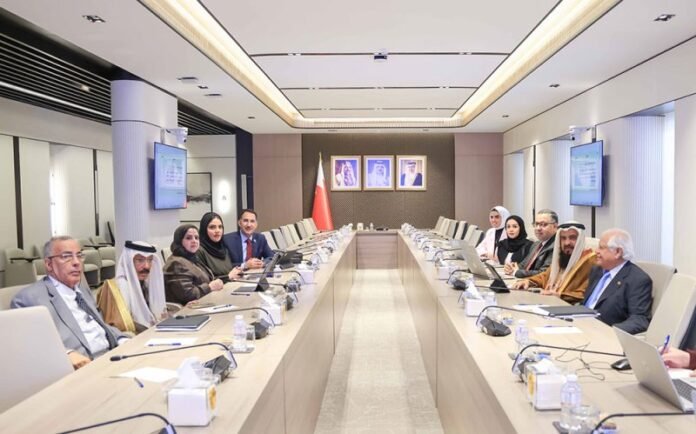
Bahrain legal reform on witness evidence has taken a major step forward during recent Shura Council discussions. Bahrain legal reform on witness evidence aims to modernize court procedures and improve access to justice for individuals. From the start, Bahrain legal reform on witness evidence reflects changing economic realities and evolving civil transactions.
The Legislative and Legal Affairs Committee of the Shura Council met on Sunday to review a draft law. The proposal seeks to amend parts of the Law of Evidence in Civil and Commercial Matters. Lawmakers want to raise the financial limit for witness testimony in legal disputes.
Currently, courts accept witness testimony for claims valued at 500 dinars or less. However, the draft law proposes raising that limit to 1,000 dinars. As a result, individuals would gain greater flexibility when proving civil and commercial rights.
During the meeting, committee members reviewed each article of the draft law carefully. They also examined a detailed legal memorandum prepared by the committee’s legal advisor. In addition, the committee reviewed official opinions submitted by several relevant authorities.
Government representatives expressed clear support for the proposed amendment. The Ministry of Justice, Islamic Affairs and Endowments also endorsed the draft. Meanwhile, the Supreme Judicial Council confirmed that the proposal falls within legislative authority. The Bahrain Bar Association also shared its professional opinion on the amendment.
Lawmakers emphasized that economic changes influenced the proposal. Over time, currency purchasing power has shifted significantly. Consequently, many everyday civil transactions now exceed the current evidence threshold. This reality often complicates legal disputes for individuals.
The committee also highlighted alignment with court jurisdiction rules. These rules already reflect updated financial thresholds in civil and commercial procedures. Therefore, lawmakers believe evidence rules should match those adjustments.
Additionally, the draft law follows previous legislative reforms. In 2009, lawmakers raised the evidence threshold from 200 dinars to 500 dinars. That change responded to similar economic pressures. Today, legislators argue that another update has become necessary.
Supporters say the amendment will simplify litigation procedures. Witness testimony offers an accessible and practical method of proof. Many individuals rely on witnesses when formal documentation proves unavailable.
Moreover, the proposal aims to reduce procedural burdens in lower-value disputes. By allowing broader evidence methods, courts can resolve cases more efficiently. This approach may also reduce delays and legal costs.
After completing its review, the committee decided to prepare a final report. The report will move to the Shura Council office before presentation at a future session. Lawmakers expect further discussion once the proposal reaches the full council.
Overall, Bahrain legal reform on witness evidence seeks to balance fairness with efficiency. The proposed amendment reflects economic realities while protecting individual rights. As discussions continue, observers expect the reform to strengthen Bahrain’s civil justice framework.
