
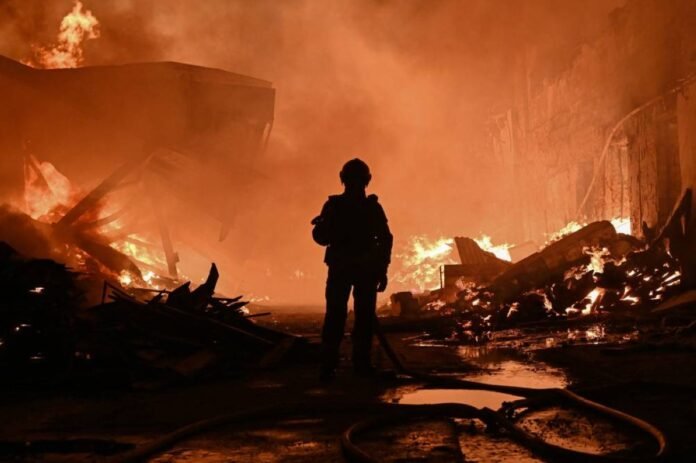
Moscow drone attack reports emerged Thursday after Mayor Sergei Sobyanin said more than 600 drones targeted Moscow and its surrounding region overnight. Russian air defense forces intercepted most of the incoming aircraft, according to the mayor.
The reported assault unfolded between 8:30 pm Wednesday and 7:00 am Thursday. During that period, drones approached the wider Moscow region, prompting defensive operations across the area. Sobyanin said air defense units destroyed many drones before they reached the capital.
According to figures shared by Russian media, defense forces destroyed 231 drones as they approached Moscow itself. Officials described the incident as an exceptionally large drone assault against the capital this year. However, the full extent of damage from the overnight operation remained unclear in the available reports.
The reported scale of the attack also raised concerns about aviation operations around the Russian capital. Authorities temporarily restricted flights at Domodedovo, Vnukovo and Zhukovsky airports during the overnight incident. The restrictions ended shortly before 7:00 am local time, according to Russian media reports.
The airport measures reflected the security challenges that drone activity can create for major transport hubs. Flight restrictions can disrupt departures and arrivals while authorities assess potential threats to aircraft and airport infrastructure. Nevertheless, the available information did not establish the total number of cancelled or delayed flights.
Sobyanin shared details of the incident through Max, a Russian messaging application. Meanwhile, the Russian Defense Ministry’s air defense forces reportedly intercepted drones at considerable distances from the capital. The mayor’s statements highlighted the scale of the defensive response during the overnight hours.
The Moscow drone attack comes amid continuing aerial attacks involving Russia and Ukraine. Both sides have reported drone operations during the ongoing conflict, although the circumstances and effects vary between incidents. Thursday’s reports placed renewed attention on the risks facing major cities far from active front lines.
Separately, a Russian attack damaged an educational facility in Kharkiv, a city in northeastern Ukraine, on Thursday. Kharkiv Mayor Ihor Terekhov reported the damage, according to media accounts. The available information did not provide further details about casualties or the extent of the facility’s destruction.
The two reported incidents illustrate how aerial attacks continue to affect urban areas on both sides of the conflict. Moreover, attacks near population centers can threaten essential services, public infrastructure and civilian safety. However, authorities had not provided enough verified information to establish the full consequences of either incident.
As the situation develops, further details may clarify the damage caused around Moscow and the impact on airport operations. Officials may also provide additional information about the Kharkiv strike and its effects on the educational facility. For now, the reported interception figures and temporary airport restrictions remain central details of the overnight events.
The Moscow drone attack also underscores the growing role of unmanned aircraft in the continuing conflict. Air defense systems remain essential for detecting and intercepting incoming drones, particularly around major population centers. However, the reported numbers alone do not establish the overall military impact or the extent of damage caused by the incident.
