
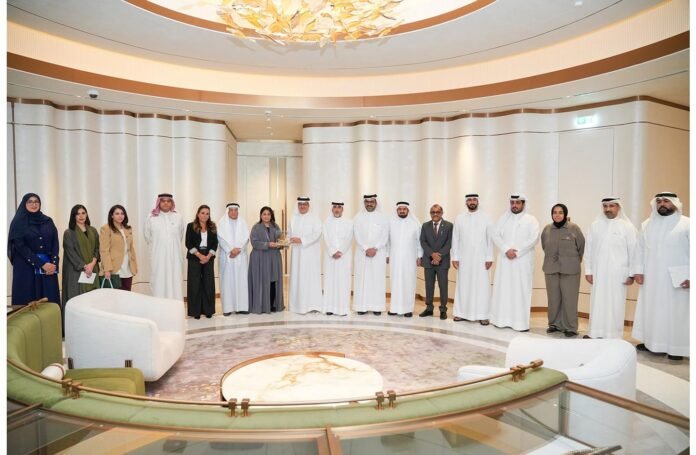
Workforce Development plans in Bahrain took centre stage during discussions between the Bahrain Chamber and Institute of Public Administration. The two organisations explored ways to strengthen national talent and improve administrative leadership across the kingdom. They also discussed training programmes designed around the changing requirements of private-sector employers.
Bahrain Chamber Chairman Nabeel Kanoo received Institute of Public Administration Director General Dr Shaikha Rana bint Isa Al Khalifa. During their meeting, the officials examined opportunities for cooperation in research, training and human resource management. They also discussed stronger connections between educational programmes and the practical needs of businesses.
Kanoo highlighted the importance of institutional cooperation in developing skills that match changing labour market requirements. He said training frameworks should reflect the realities facing companies across Bahrain’s private sector. According to Kanoo, stronger alignment could help national talent respond effectively to rapid economic changes.
He also described human capital development as an important factor supporting sustainable business growth. Furthermore, he linked stronger employee capabilities with greater competitiveness among private-sector companies across Bahrain. The Bahrain Chamber therefore wants future initiatives to provide practical value for businesses and their employees.
Kanoo said joint programmes should address genuine challenges affecting companies and their employees. He stressed that training providers need to understand operational difficulties before developing new educational initiatives. Consequently, direct assessments of business needs could help produce more relevant and measurable training outcomes.
The Bahrain Chamber also plans to focus on programmes that can improve workplace productivity. These initiatives could provide employees with practical skills while helping businesses address existing capability gaps. Moreover, targeted training could help companies adapt to changing economic conditions and evolving workplace requirements.
Dr Shaikha Rana emphasised the importance of maintaining direct communication with Bahrain’s business community. She said regular engagement with employers can help identify current market requirements and emerging workforce needs. This information can then support the development of more targeted training and capacity-building programmes.
The Institute of Public Administration can use business feedback when designing leadership and administrative courses. Such engagement can also help ensure that programmes reflect challenges facing national employees and private-sector institutions. As a result, training initiatives could become more closely connected with actual workplace requirements.
The discussions also addressed leadership development as an important component of national workforce planning. Strong administrative capabilities can help institutions manage changing economic conditions and organisational demands. Therefore, the two organisations intend to explore initiatives that strengthen leadership skills alongside technical capabilities.
Workforce Development also formed part of broader discussions about cooperation between Bahrain’s public and private sectors. Both sides recognised the importance of maintaining communication between training institutions and businesses. This approach can help identify skills gaps while creating programmes that respond directly to market conditions.
The meeting concluded with an agreement to establish frameworks for exchanging expertise between specialists. The organisations also agreed to develop practical training initiatives that can expand capacity-building opportunities. These programmes will focus particularly on private-sector institutions and their workforce requirements.
Expert exchanges could allow specialists from both organisations to share knowledge and identify areas requiring additional development. Furthermore, such cooperation could support more coordinated approaches to training, research and human resource management. The partners can subsequently use those insights to develop programmes with clear practical objectives.
The initiative also supports Bahrain’s wider economic development objectives by focusing on national talent and business competitiveness. Private-sector companies require employees with skills that can respond to changing markets and technologies. Training programmes tailored to those requirements can therefore support businesses as they expand and adapt.
Both organisations will now work toward translating the discussions into actionable training opportunities. Their cooperation is expected to strengthen connections between employers, training institutions and national talent. Additionally, the planned programmes could create more opportunities for employees to develop professional and leadership capabilities.
Workforce Development remains closely connected to Bahrain’s efforts to strengthen its private-sector workforce. The latest discussions place practical training, leadership development and employer engagement at the centre. Through continued cooperation, the two organisations aim to create training initiatives that address measurable business needs.
The partnership will also provide a framework for continued dialogue between the Bahrain Chamber and Institute of Public Administration. Regular communication can help both organisations adjust training priorities as market conditions change. This approach could ensure future programmes remain relevant to businesses and employees across Bahrain.
