
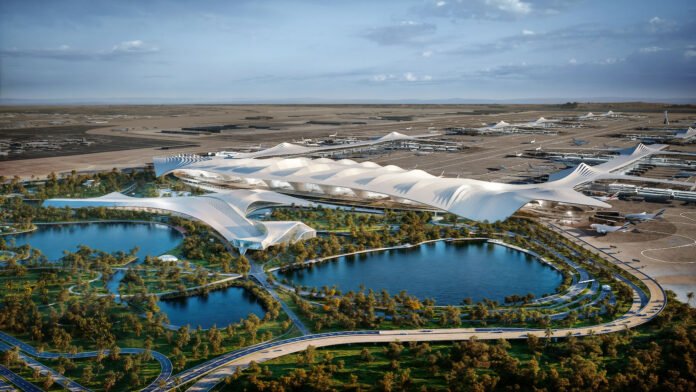
Dubai Aviation City Corporation awarded a major transit contract to build a fifty-kilometer automated people mover system. A specialized consortium led by Mitsubishi Heavy Industries will construct the massive driverless network at Al Maktoum International Airport. Furthermore, the system will connect nine major passenger stations using 165 fully automated transit vehicles. Consequently, this advanced internal automated people mover will become the largest airport transit network in the world upon completion.
The ambitious transit project forms a central part of Dubai’s massive multi-billion-dollar airport expansion development plans. Engineers designed the internal transport system to support target passenger capacities exceeding 260 million travelers annually. Furthermore, project managers scheduled full system completion for December 2031 ahead of the airport’s official 2032 opening. Therefore, seamless internal transit capabilities will significantly reduce transit times between passenger terminals and major airport facilities.
Consortium partners Mitsubishi Heavy Industries Mobility Engineering Services and Larsen and Toubro share responsibility for complete system integration. Technical teams will lead the procurement, signaling installation, and rigorous safety testing of all automated transit vehicles. Additionally, engineering groups will handle civil construction, electrical infrastructure, and structural assembly across the nine station locations. Thus, advanced engineering expertise ensures the driverless transit system delivers high operational efficiency and passenger convenience.
Municipal authorities simultaneously plan external rail connections to link the mega aviation hub with central Dubai. Transport planners are designing an Airport Express Line, an Etihad Rail high-speed connection, and the Metro Gold Line. These external transit options will connect urban centers directly with the airport’s internal automated people mover network. Ultimately, integrated transportation infrastructure will provide passengers with exceptionally fast interfaces between ground and air travel.
