
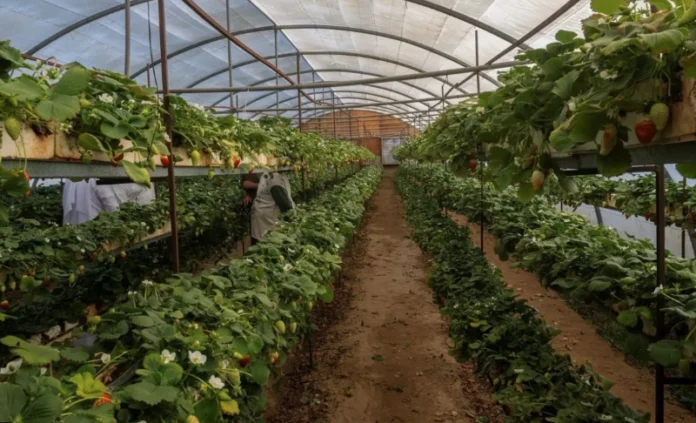
More than 4,400 greenhouses in Saudi Arabia’s Najran region have produced over 37,000 tons of crops, highlighting the growing role of protected agriculture in strengthening food security and supporting the local economy.
The greenhouses primarily cultivate tomatoes and cucumbers, while also producing bell peppers, zucchini, eggplant, okra, strawberries, figs and a range of leafy vegetables. Farmers use modern agricultural practices, including efficient irrigation, fertilisation and continuous crop monitoring, to improve productivity and quality.
Protected agriculture has become a key part of Najran’s farming sector by creating controlled growing conditions that allow year-round production while reducing water consumption and preserving natural resources. The greenhouses regulate temperature, humidity, ventilation and lighting, helping crops withstand harsh weather and reducing exposure to pests.
The Ministry of Environment, Water and Agriculture said the region’s favourable environmental conditions have enabled farmers to expand agricultural production and improve sustainability.
Mureeh bin Sharea Al-Shahrani, Director General of the ministry’s Najran branch, said greenhouses provide an ideal environment for modern agricultural production and remain an important tool for advancing the sector. He added that the ministry continues to encourage farmers to expand the use of protected agriculture to improve efficiency, increase production and support Saudi Arabia’s food security goals.
