
Kuwait is witnessing a noticeable rise in sightings of rare and migratory bird species, according to environmental specialists who say the trend reflects changing ecological conditions and the country’s growing role within regional migration routes.
The Kuwaiti Society for Environmental Protection said recent field observations have documented shifts in bird movement, seasonal activity and breeding behavior across several parts of the country. Researchers believe the developments highlight Kuwait’s importance as a strategic refuge for species traveling across the Arabian Peninsula.
Mohammed Al-Hadheena, a member of the society’s Bird Monitoring and Protection Team, said long-term monitoring efforts have revealed significant changes in the geographical and biological patterns of a number of species.
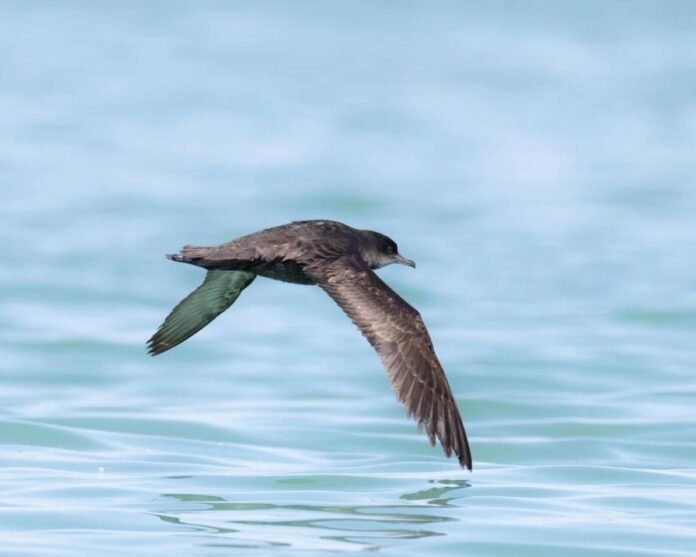
Among the most closely watched developments is the increased appearance of the short-tailed shearwater, a seabird previously considered a rare visitor to Kuwaiti waters. The species was first recorded near Ras Al-Salmiya in 2014 before later sightings were documented around Al-Zour and Qaruh Island in 2021.
Observers reported a sharp increase in numbers last year, including flocks near Al-Ahmadi Port and the Shuaiba area. Smaller groups have also recently been seen near the Sheikh Jaber Al-Ahmad Causeway, suggesting the species may be expanding its activity deeper into Kuwait Bay.
Al-Hadheena said the repeated sightings point to changing marine conditions that may be attracting the birds, including favorable currents and nutrient-rich waters.
On land, researchers also noted changes involving the black-bellied sandgrouse, a species historically regarded as an irregular migrant in Kuwait. The bird was first documented locally in 2006, mainly in protected and agricultural areas.
In a significant development, conservation teams recorded a breeding pair in 2025 along with the presence of a chick that remains at the site. Environmental observers say continued monitoring will determine whether the species can eventually be classified as a confirmed breeding bird in the country.
The society also highlighted the growing visibility of the purple sunbird, which has become a regular winter visitor in gardens, farms and residential districts. Sightings have become increasingly common since the species was first documented in Ras Al-Subiya in 2008 and later in Al-Khiran several years afterward.
Experts attribute the bird’s successful adaptation to the expansion of landscaped urban areas and green projects across Kuwait, including public parks, coastal zones and residential neighborhoods.
Environmental researchers say the growing volume of bird-monitoring data offers insight into broader climate and habitat changes affecting the Gulf region. They add that preserving marine and terrestrial migration corridors remains important for maintaining biodiversity and supporting migratory species moving between Asia, Africa and the Middle East.
