
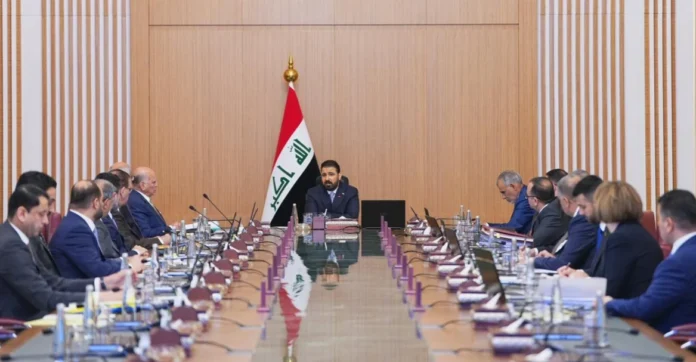
An Iraqi lawmaker has raised concerns over the legality of a newly established anti-corruption council announced by Prime Minister Ali Al-Zaidi, arguing that it may conflict with constitutional provisions governing independent oversight institutions.
The statement from MP Mohammad Jasem Al-Khafaji came after the government introduced the Supreme Sovereign Council for Integrity, Oversight, and Recovery of Public Funds, a body expected to coordinate financial oversight efforts across state institutions.
According to the Prime Minister’s Office, the council will be chaired by Al-Zaidi and include the heads of Iraq’s Federal Integrity Commission and the Federal Board of Supreme Audit. It is tasked with reviewing government spending, monitoring ministries and provincial administrations, and referring suspected violations to the judiciary.
The announcement was presented as part of broader efforts to strengthen financial accountability and recover public assets amid long-standing concerns over corruption and inefficiency in public institutions.
However, Al-Khafaji argued that the structure of the new body raises constitutional issues, particularly because it places the prime minister at the head of an institution that oversees executive functions, including government ministries.
He questioned whether the arrangement aligns with Iraq’s legal framework governing independent watchdog bodies, describing it as a potential violation of separation of powers principles. The MP also urged the government to rely on existing legislation and to appoint leadership of oversight institutions through parliamentary approval processes.
The government has previously stated that its anti-corruption strategy focuses on reviewing major contracts, improving oversight mechanisms and ensuring better management of public funds.
In comments tied to the “New Iraq anti-corruption council is ‘illegal’, MP warns”, the debate highlights ongoing tensions between efforts to centralise anti-graft initiatives and concerns over institutional independence.
The development comes as Iraq continues to face pressure to strengthen governance and improve transparency across its public sector, issues that remain central to political debate in the country and across parts of the wider region.
