
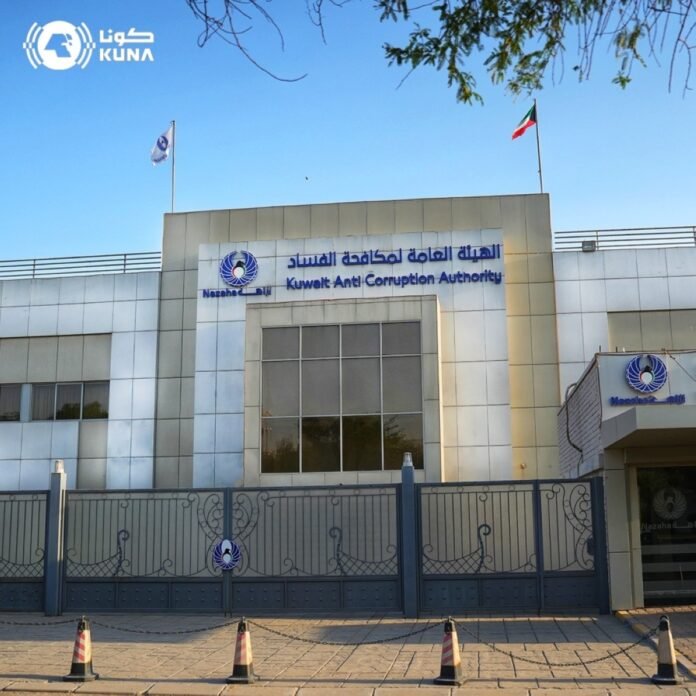
Kuwait’s Anti-Corruption Authority, known as Nazaha, has announced the completion of its first national strategy aimed at strengthening integrity and combating corruption, reporting a 90% implementation rate over the 2019–2025 period.
In its final annual report, the authority said the six-year plan helped establish a more structured national framework built on legislative reforms, improved public administration, and the expansion of digital government services.
Officials described the progress as a sign of growing institutional maturity in governance and transparency, despite challenges faced during the implementation period.
Key legal developments during the final phase included amendments to Nazaha’s founding law under Decree-Law No. 69 of 2025. These changes strengthened financial disclosure rules, expanded measures related to illicit enrichment, and enhanced protections for whistleblowers.
The report also highlighted Decree-Law No. 79 of 2025 on international judicial cooperation in criminal cases, which authorities say has improved the handling of cross-border corruption investigations. These measures build on earlier legislation, including laws on access to information and conflict of interest regulations.
On governance reforms, Nazaha noted the adoption of a national administrative governance guide and updated codes of conduct covering public officials across multiple state sectors. These efforts were supported by monitoring and accountability initiatives designed to improve institutional performance.
Digital transformation was also identified as a major pillar of the strategy. The government services platform “Sahel” now integrates dozens of public entities and provides hundreds of electronic services, reducing administrative complexity and limiting direct contact in service delivery.
Nazaha said the platform’s development contributed to improved transparency in public services and was recognised with the Arab Government Excellence Award 2025.
The authority added that its broader strategy project also received the same regional award for “Best Arab Project for Developing Government Work,” underscoring what it described as the success of its institutional approach.
Looking ahead, Kuwait is preparing a new post-2025 strategy in cooperation with the United Nations Development Programme (UNDP). The next phase has involved consultations with more than 250 participants from government and non-government institutions.
Nazaha said the achievements of the past six years form a foundation for continued efforts to strengthen governance, enhance transparency, and build public trust in state institutions.
