
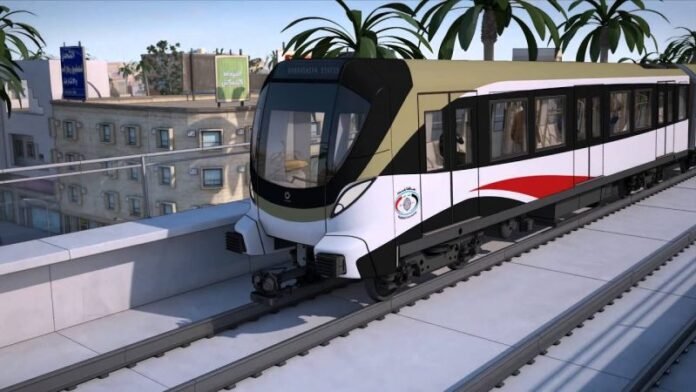
Iraq is moving forward with a major Baghdad Metro redesign to improve public transport in the capital. From the start, officials highlighted that the Baghdad Metro redesign will serve as the backbone of the city’s transport network. Moreover, the updated plan combines ground-level, elevated, and underground lines to cut costs and increase connectivity.
Prime Minister’s Adviser for Investment Affairs Mohammed Al-Najjar said the new routes will match Baghdad’s geography and traffic patterns. Ground-level tracks will cost $20–30 million per kilometre, elevated lines $50–70 million. Also the underground tunnels $200 million per kilometre. Previously, planners relied too much on underground construction, making projects too expensive and inefficient.
Iraq’s population has grown from around 3 million to nearly 10 million residents, expanding toward areas like Al-Mahmoudiya. Therefore, the Baghdad Metro redesign accounts for these changes. In addition, it will integrate with buses and trams, allowing passengers to travel from stations to final destinations without increasing surface congestion.
The metro will operate fully automated and driverless. Although upfront costs rise, automation will lower long-term operating and maintenance expenses. Consequently, this system improves efficiency and reduces staffing requirements.
The government plans to deliver the project through a public–private partnership (PPP) model with a 30-year concession agreement. This approach will reduce pressure on public finances. Moreover, the World Bank and European Bank for Reconstruction and Development have expressed strong interest in supporting the project as partners.
The Baghdad Metro redesign follows Iraq’s recent award of the Baghdad airport PPP project to the CAAP–Amwaj consortium in October 2025. Meanwhile, officials emphasized that the metro project reflects Iraq’s commitment to modernizing urban infrastructure and attracting private investment in key transport networks.
In conclusion, the Baghdad Metro redesign represents a major step in transforming public transport. It combines cost efficiency, technology, and integrated planning to meet a growing population’s needs. Therefore, by linking different transport modes and reducing congestion, the project aims to improve daily travel in Baghdad while drawing regional and international investment. The Baghdad Metro redesign demonstrates Iraq’s commitment to sustainable urban growth and modern transport solutions.
