
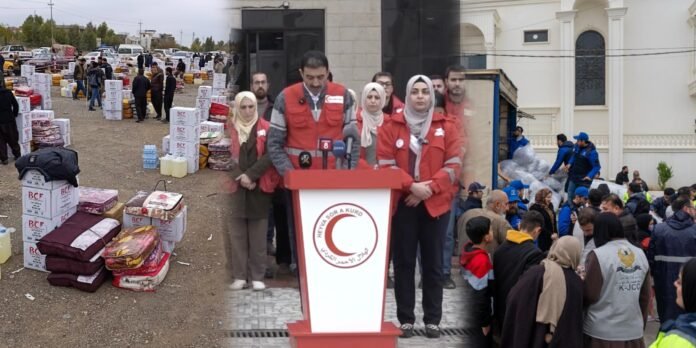
Communities across the Kurdistan Region have demonstrated remarkable humanitarian unity following devastating floods that struck several cities and towns. From large cities to small districts, citizens, charities, and volunteers mobilized quickly to offer Kurdish humanitarian support to families who lost homes, belongings, and livelihoods.
In the aftermath of heavy rainfall and flash floods, public response was immediate. Kurdish humanitarian support intensified as residents organized donation drives, collected cash contributions, and delivered essential supplies. Many campaigns emerged spontaneously, led by ordinary people who felt a moral duty to help fellow Kurds during hardship.
Local solidarity played a central role in the relief effort. In several areas, communities raised significant funds within days. Volunteers gathered food, blankets, fuel, cleaning materials, and household items. Donations were then transported directly to affected neighborhoods, ensuring rapid Kurdish humanitarian support for displaced families.
Established charitable organizations also took part in large-scale relief operations. The Barzani Charity Foundation provided food packages, fuel, clothing, and basic necessities to hundreds of families. Rwanga Foundation distributed household supplies, mattresses, and emergency aid. Other organizations, including Kurdistan Save the Children, SEED Organization, the Civil Development Organization, and the Iraqi Red Crescent Society, joined the response with coordinated assistance, enhancing Kurdish humanitarian support.
Grassroots initiatives strengthened these efforts further. In towns and districts across Erbil, Sulaymaniyah, and surrounding areas, volunteers launched local campaigns to gather donations. Youth groups played an active role, helping with logistics, distribution, and cleanup efforts in flooded neighborhoods.
Notably, children also contributed to the relief movement. Some donated personal savings or toys to support affected families. Their participation highlighted the depth of compassion embedded in Kurdish society and showed that solidarity and Kurdish humanitarian support transcend age.
Authorities welcomed the widespread support while emphasizing the importance of coordination. Officials encouraged citizens to donate through trusted organizations to ensure aid reached those in need efficiently and fairly. This cooperation between the public, charities, and local institutions helped prevent chaos and improved delivery efforts.
The flood response revealed a defining feature of Kurdish society: collective responsibility during crisis. Many donors cited past experiences of receiving help during difficult times, reinforcing a culture of mutual support and Kurdish humanitarian support. For them, giving was not charity alone but a shared obligation.
As recovery continues, these humanitarian efforts remain vital. While rebuilding damaged homes and infrastructure will take time, the immediate response has already eased suffering for many families. More importantly, it has reaffirmed a strong sense of unity and Kurdish humanitarian support across the Kurdistan Region.
In moments of crisis, Kurdish society once again proved its capacity for compassion, resilience, and action—standing together when it mattered most.
