
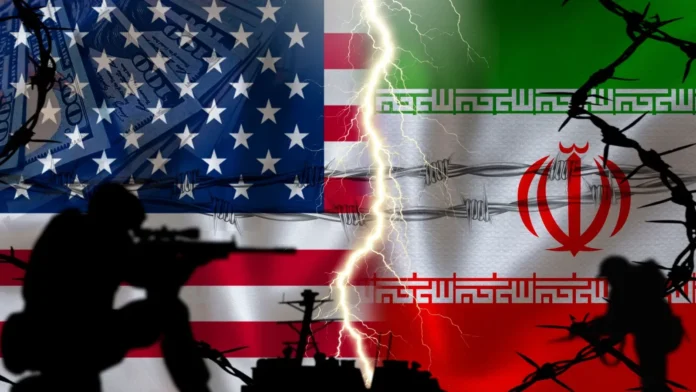
US President Donald Trump said on Wednesday that the conflict involving the United States, Israel, and Iran could end if Tehran agrees to a proposed framework currently under discussion. He indicated that the reopening of the Strait of Hormuz would follow any agreement, restoring access to one of the world’s most critical shipping routes.
Trump stated on social media that the outcome depends on Iran’s willingness to meet the terms already outlined. He warned that failure to do so could trigger a renewed military escalation, potentially at a higher intensity than earlier operations. His remarks came as diplomatic signals suggested both sides were moving closer to a preliminary understanding.
Meanwhile, Iran’s Islamic Revolutionary Guard Corps Navy said safe passage through the Strait of Hormuz would be ensured once what it described as US threats come to an end. In a statement carried by state media, the force outlined that new procedures would be implemented, although it did not provide specific details. It also acknowledged cooperation from shipping operators who have complied with Iranian navigation measures in recent weeks.
A source familiar with the negotiations, speaking from Pakistan, said discussions have progressed toward a concise memorandum aimed at ending hostilities in the Gulf. According to the source, the proposed document includes 14 points and could serve as the basis for a broader agreement. The framework is expected to introduce a 30-day negotiation period to finalize key issues, including maritime access, nuclear activity, and sanctions relief.
Reports from US media indicate that Washington is awaiting Tehran’s response on several central provisions. These reportedly include a temporary halt to Iran’s nuclear enrichment activities, alongside a phased lifting of US sanctions and the release of frozen Iranian funds. Both sides would also ease restrictions affecting transit through the Strait of Hormuz.
The proposed memorandum is being discussed by US envoys, including Steve Witkoff and Jared Kushner, in coordination with Iranian representatives and international mediators. If agreed, it would formally mark an end to active hostilities and initiate structured talks on a long-term settlement.
Earlier in the week, Trump announced a temporary pause to a US naval initiative designed to escort vessels through the strait. The mission, launched to restore maritime traffic, had limited success and coincided with increased attacks on commercial shipping. A French shipping company reported that one of its vessels was struck, with crew members evacuated after sustaining injuries.
The Strait of Hormuz has remained largely closed since late February, following the outbreak of conflict involving US and Israeli forces and Iran. During this period, Tehran has restricted access to the waterway, while Washington imposed additional maritime measures targeting Iranian ports.
Iran’s Foreign Minister Abbas Araghchi, speaking during a visit to China, reiterated Tehran’s position that any agreement must be balanced and comprehensive. He also emphasized the role of regional diplomacy in preventing further escalation, noting recent discussions with Gulf counterparts.
The situation remains fluid, with both diplomatic progress and military risks unfolding simultaneously. Observers say the coming days could prove decisive in determining whether negotiations lead to de-escalation or a return to intensified conflict.
