
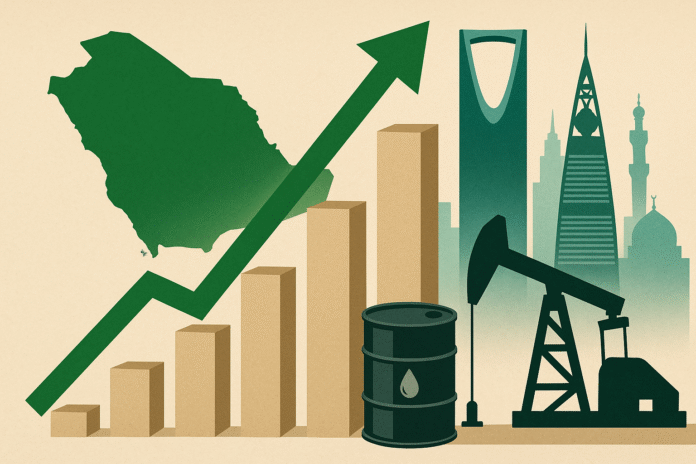
Saudi Arabia reported strong results in Q3 2025, showing clear signs of non-oil trade growth. The increase highlights the country’s push to reduce reliance on oil and expand other industries. Analysts said the trend reflects more exports, higher re-exports, and better overall trade performance.
In Q3 2025, total non-oil exports, including re-exports, rose 19.4% to about SAR 95.48 billion. National non-oil exports, excluding re-exports, fell slightly by 0.4%, reaching SAR 57.02 billion. At the same time, re-exported goods jumped 69.6% to SAR 38.46 billion, led by machinery, electrical equipment, and parts. These items made up 61.8% of total re-exports.
Total merchandise exports increased 9.5% from Q3 2024 to SAR 303.3 billion. Oil exports also grew 5.5% to SAR 207.8 billion. As a result, oil’s share of total exports fell from 71.1% to 68.5%. Imports rose 7.5% to SAR 237.16 billion. The trade surplus increased 17.2% to SAR 66.13 billion.
September data supported the same trend. Non-oil exports, including re-exports, rose 21.7% to SAR 32.06 billion. National non-oil exports rose 2.8% to SAR 19.74 billion. Re-exported goods grew 72.2% to SAR 12.32 billion, led by machinery and electrical equipment with a 117.2% rise.
Overall merchandise exports in September rose 14% to SAR 101.39 billion. Oil exports increased 10.7% to SAR 69.33 billion, while their share of total exports dropped from 70.4% to 68.4%. Imports rose 2.8% to SAR 75.4 billion. The trade surplus jumped 66.3% to SAR 25.99 billion.
The strong non-oil trade growth shows Saudi Arabia is moving toward a more balanced economy. Experts said expanding exports in other sectors will reduce oil dependence. This growth also opens new chances for investment and strengthens the country’s global trade position.
The non-oil trade growth reflects Saudi Arabia’s strategy to create a sustainable economy. With steady efforts in trade and industry, the country can continue expanding exports and building economic stability. The trend of non-oil trade growth promises a brighter future for Saudi Arabia’s economy.
