
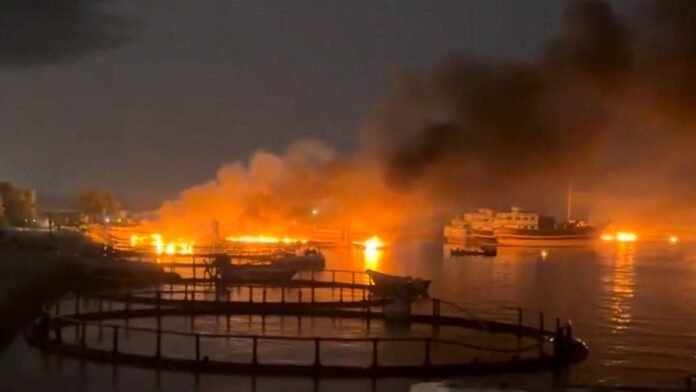
Tensions between the United States and Iran have intensified after a new wave of strikes and retaliatory attacks widened the conflict across the Gulf region.
The United States launched fresh airstrikes on Iranian military sites and infrastructure following attacks on commercial ships in the Strait of Hormuz. Iran responded by targeting Gulf countries hosting US military assets, including Bahrain, Kuwait, and Qatar.
Sirens were reported in Bahrain, which hosts the headquarters of the US Navy’s Fifth Fleet, while authorities in the affected Gulf states reported no immediate details on damage or casualties.
The latest escalation has raised concerns over the future of an interim truce between Washington and Tehran. US President Donald Trump said recent attacks on ships showed that the ceasefire was effectively over, while both sides continued exchanging threats.
The US military said its operations targeted locations linked to Iran’s military capabilities, while Iranian officials reported casualties following the strikes. Tehran has accused Washington of escalating tensions and warned that further attacks would face a response.
The Strait of Hormuz remains a major focus of the crisis due to its importance for global energy supplies. The waterway handles a significant share of international oil and gas shipments, making any disruption a concern for regional and global markets.
Diplomatic efforts to reach a broader agreement remain uncertain as the latest military exchanges deepen fears of a wider regional confrontation. Gulf countries continue to call for restraint and a return to dialogue to protect regional stability.
