
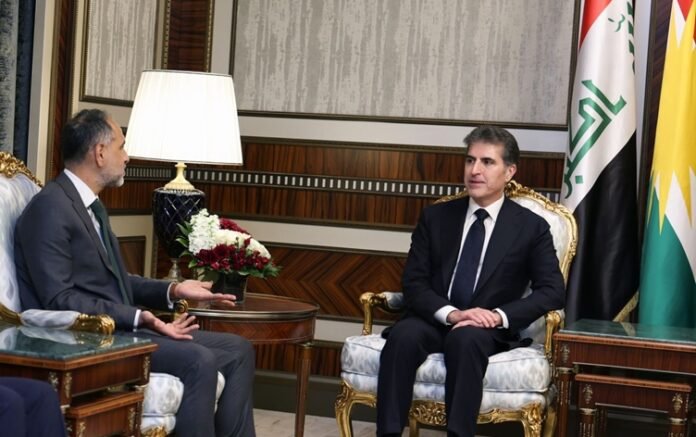
The Iraq presidency deadlock dominated discussions as a UK delegation met Kurdistan Region leaders in Erbil. From the start, talks focused on political paralysis and delayed decision-making. Moreover, British officials sought clarity on Kurdish positions amid rising national uncertainty. At the same time, Kurdish leaders emphasized the urgency of resolving the ongoing crisis.
The UK ambassador to Iraq led the delegation during meetings with senior Kurdistan figures. First, discussions addressed the internal situation within the Kurdistan Region. Then, talks shifted toward strained relations between major Kurdish political parties. Additionally, leaders reviewed the broader Iraqi political environment. Throughout the meetings, participants stressed dialogue as a necessary path forward.
Kurdistan Region leadership showed concerns over repeated delays in electing Iraq’s president. Recently, parliament postponed a key session without announcing a new date. As a result, political uncertainty continued to grow nationwide. Furthermore, disagreements between Kurdish parties deepened the Iraq presidency deadlock. Each party continued supporting a different candidate for the position.
UK representatives underlined the importance of coordination among Iraqi political forces. They argued that cooperation could ease tensions and prevent further instability. Meanwhile, Kurdish leaders agreed that political fragmentation harmed both governance and public trust. Therefore, they called for structured dialogue to resolve outstanding disputes.
Separate meetings also addressed the formation of the next Iraqi federal government. Leaders discussed challenges caused by stalled negotiations and political rivalries. Additionally, Kurdish officials raised concerns about prolonged caretaker administrations. According to them, temporary governments struggled to address economic and public service needs. Consequently, citizens faced mounting frustrations across the region.
Talks further explored Kurdish rights within the federal system. Leaders focused on protecting constitutional guarantees and political representation. Moreover, they stressed maintaining Kurdish unity during national negotiations. Without unity, they warned, Kurdish influence in Baghdad could weaken significantly. This concern linked directly to the Iraq presidency deadlock and its broader implications.
UK officials reaffirmed long-standing ties with the Kurdistan Region. They show cased cooperation in security, governance, and political development. Additionally, they acknowledged Kurdish contributions during the fight against extremist threats. This partnership, they noted, remained essential for regional stability.
The delegation also met other senior Kurdish figures to gain wider perspectives. These discussions focused on cabinet formation within the Kurdistan Region. Leaders pointed to unresolved political disagreements as major obstacles. Therefore, they urged renewed negotiations to break the impasse.
In conclusion, the meetings showed shared concern over Iraq’s political stagnation. Both sides agreed that delays threatened institutional stability. Ultimately, resolving the Iraq presidency deadlock emerged as a critical step toward restoring political momentum. Without swift action, leaders warned, uncertainty could deepen across Iraq.
