
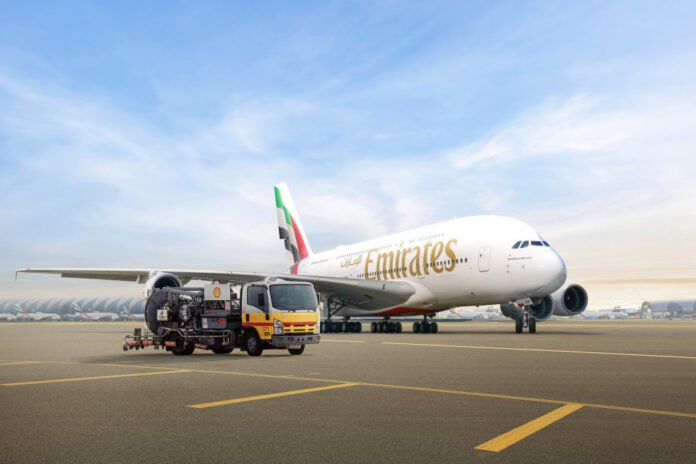
The United Arab Emirates is accelerating efforts to implement sustainable aviation fuel, reflecting its ambition to lead global aviation sustainability. Authorities are considering moving from the current voluntary 1% blend of SAF (sustainable aviation fuel) to a mandatory requirement. This key step demonstrates the UAE’s commitment to reducing carbon emissions and shaping the future of green aviation.
Sharif Al Olama, undersecretary for energy and petroleum affairs at the UAE Ministry of Energy and Infrastructure, highlighted that a “comprehensive assessment” of SAF’s economic impact will guide the country’s next regulatory steps. Over the coming year, the government will evaluate both investment opportunities and operational feasibility before finalizing a mandate.
Al Olama emphasized that the UAE has the potential to set a global example in sustainable aviation. “We want to hit the ground running with SAF,” he said. He also announced meetings with Abu Dhabi Airport, Dubai Airport, Etihad Airways, and Emirates to determine when the country can advance to the next phase. Reactions from these key stakeholders have been positive, he added.
The UAE’s SAF and LCAF (Lower Carbon Aviation Fuel) Committee actively mediates between fuel suppliers and offtakers. This collaboration ensures that the future of SAF in the UAE remains feasible, efficient, and economically sustainable.
Maryam Ali AlBalooshi, environment manager at the UAE General Civil Aviation Authority, noted that the UAE aims to deliver measurable results by 2028. She said the country is building its SAF model differently from other nations. While policies and roadmaps are in place, other supporting elements, such as technology adoption and operational frameworks, still need development.
The UAE’s aviation infrastructure provides an ideal foundation for SAF expansion. Airports in Abu Dhabi and Dubai offer sufficient scale to implement innovative solutions, such as converting airport waste into SAF. Officials also pointed to the country’s ability to attract investment, provide financing, and maintain agile governance as crucial advantages.
Overall, the UAE’s push toward mandatory SAF demonstrates a strong commitment to green aviation. The initiative positions the nation as a leader in sustainable energy for aviation. SAF adoption in the UAE will shape the future of eco-friendly air travel and inspire global aviation sustainability.
