
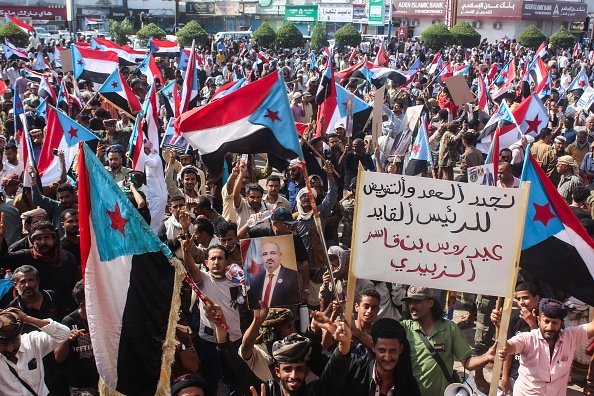
Thousands of Yemenis took to the streets of Aden on Saturday to show support for the Southern Transitional Council. The STC denied recent claims that it planned to disband. From chanting slogans demanding independence to holding portraits of STC leader Aidarous al-Zubaidi, supporters made their voices heard. The Southern Transitional Council has become a symbol of southern Yemen’s political struggle, drawing attention to growing regional tensions.
In December, the STC seized parts of southern and eastern Yemen, a move that escalated rivalries between the UAE and Saudi Arabia. While the UAE backs the STC, Saudi Arabia supports the Yemeni government. This division has exposed cracks within the Gulf coalition that once fought together against Houthi forces.
Despite warnings from Saudi-backed authorities to avoid protests, citizens defiantly rallied. One protester told Reuters, “No one can silence us—not Saudi Arabia, nor any other country.” Another described the gathering as a “popular referendum for the Southern Transitional Council in the south.”
The STC issued a statement on Saturday rejecting claims of disbandment. It explained that a coerced announcement in Riyadh, made under pressure, was invalid. The group also reported that some of its members in Saudi Arabia were detained and forced to make statements.
Tensions between the UAE and Saudi Arabia are at the forefront of the political crisis. UAE support allowed the STC to advance, while Saudi-led forces reclaimed some contested areas. Analysts say this rivalry highlights broader disagreements across the Middle East, from geopolitics to energy strategy.
Authorities aligned with the Saudi-backed government in Aden had previously banned demonstrations in southern cities, citing security concerns. Nevertheless, protests continued, emphasizing the Southern Transitional Council’s influence and the local population’s determination to resist outside pressures.
Observers note that the STC’s mobilization and the ensuing protests underscore Yemen’s fragile political balance. The conflict illustrates how regional powers, namely Saudi Arabia and the UAE, shape the local landscape, often intensifying divisions.
As Yemen navigates this turbulence, the Southern Transitional Council remains at the center of southern politics. Analysts warn that without careful diplomacy, clashes between local and foreign-backed actors could escalate further, threatening stability in Aden and beyond.
