
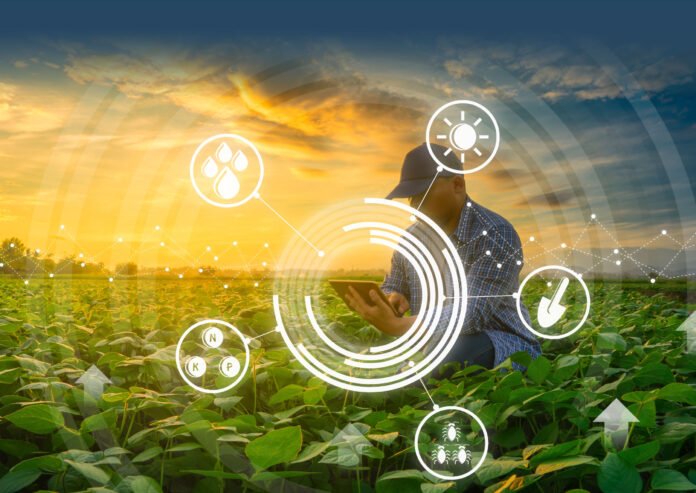
Oman’s smart agriculture strategy is playing a growing role in transforming food production and resource management across the country. This shift aligns with Oman Vision 2040, which emphasizes modernization and sustainability in farming practices.
Recently, Oman expanded its use of agricultural technology. These include drone applications, smart irrigation systems, and protected farming techniques. Although implementation remains gradual, interest is rising, especially among private investors and research institutions.
Eng. Badriya Saif Al-Hosni, who leads the Smart Agriculture Department, highlighted the ministry’s push for digital transformation. She said the strategy focuses on boosting crop productivity and cutting input costs. It also aims to give farmers direct access to precision tools.
She added that Oman balances innovation with tradition. For example, authorities are upgrading aflaj water channels using digital controls. Simultaneously, gene banks are helping preserve local plant varieties.
In recent years, Oman introduced several high-tech systems. These include hydroponics, aquaponics, and precision agriculture. Such systems analyze geographic and climate data to guide irrigation practices. Drones now support palm pollination, pest control, and crop health monitoring.
Additionally, solar energy powers several farms and greenhouses. This reduces environmental impact while cutting operating costs.
To support farmers, the ministry offers specialized training in smart agriculture strategy. Programs cover drone operations, mobile farming apps, and soil-free cultivation. Pilot farms help transfer technology and provide real-world examples for farmers.
The government has also allocated dedicated funds to support digital farming projects. Public-private partnerships are encouraged to increase investments in smart farming systems.
Al-Hosni noted that the ministry integrates smart agriculture strategy into every aspect of development. Officials pair digital tools with heritage preservation to maintain Oman’s identity. The aflaj system, for instance, retains its traditional role while using modern water regulation.
Challenges remain. These include gaps in digital infrastructure and low awareness among small farmers. Some technologies also present high maintenance costs. However, programs from the Development Bank and agricultural cooperatives offer soft loans and shared resources.
In conclusion, Oman’s smart agriculture strategy continues to reshape its farming landscape. The nation now stands at the intersection of innovation, culture, and food security.
