
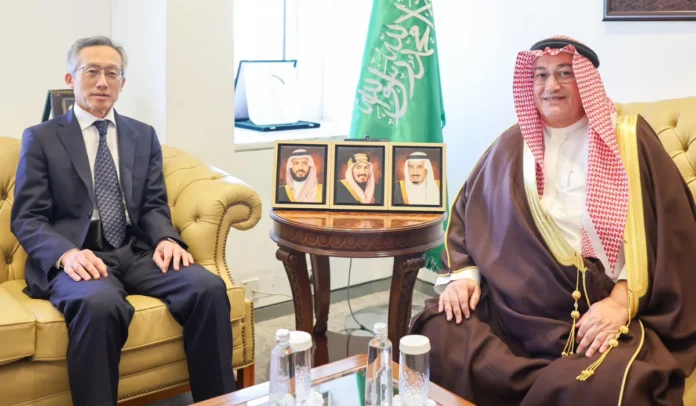
Saudi Arabia held separate diplomatic meetings with Japanese and Georgian representatives in Riyadh, focusing on Diplomatic Relations and shared interests. Deputy Minister for Public Diplomacy Dr. Rayed Krimly received both ambassadors on Monday, November 2.
During the first meeting, Krimly welcomed Japan’s Ambassador to Saudi Arabia, Yasunari Morino. The two officials discussed matters of mutual interest and reviewed the relationship between their countries.
They also considered ways to strengthen and develop bilateral ties in line with both governments’ aspirations. Although the announcement offered few details, the meeting highlighted continued diplomatic engagement between Riyadh and Tokyo.
Japan and Saudi Arabia maintain relations across several areas, including economic cooperation, energy and investment. Their diplomatic contacts provide opportunities to discuss shared priorities and explore areas for further collaboration.
The meeting with Morino formed part of Saudi Arabia’s ongoing engagement with international diplomatic representatives. Such discussions allow officials to maintain communication and address issues relevant to their respective countries.
Krimly also held a separate meeting with Georgia’s Ambassador to Saudi Arabia, Nikoloz Revazishvili. The Saudi Foreign Ministry announced the second meeting alongside its update about the Japanese ambassador’s visit.
However, the ministry’s announcement did not provide further information about the subjects discussed with Revazishvili. It also did not specify whether the Georgian meeting produced any agreements or new initiatives.
The two meetings brought together Saudi Arabia’s public diplomacy leadership and ambassadors representing countries in Asia and the Caucasus. Consequently, they reflected Riyadh’s continued diplomatic outreach to international partners.
Krimly’s role as Deputy Minister for Public Diplomacy places his work within Saudi Arabia’s broader international engagement. Meetings with foreign ambassadors provide channels for dialogue, relationship-building and discussion of mutual interests.
The Japanese meeting specifically emphasised the importance of developing bilateral ties according to both countries’ aspirations. Nevertheless, officials did not announce particular projects, timelines or policy decisions following their discussions.
Likewise, the announcement about the Georgian ambassador’s visit contained no specific details about future cooperation. Further information would therefore be needed to establish whether the meeting addressed particular sectors or initiatives.
Diplomatic Relations remain an important part of Saudi Arabia’s engagement with international partners. Through regular meetings, officials can maintain dialogue and identify opportunities to strengthen connections between governments.
The meetings in Riyadh also demonstrated the range of diplomatic contacts maintained by the Saudi Foreign Ministry. Japan and Georgia represent different regions, yet both maintain diplomatic channels with the Kingdom.
For now, the announcements confirm that Krimly met both ambassadors and reviewed bilateral ties with Japan. They do not indicate any major policy changes or signed agreements resulting from either meeting.
