
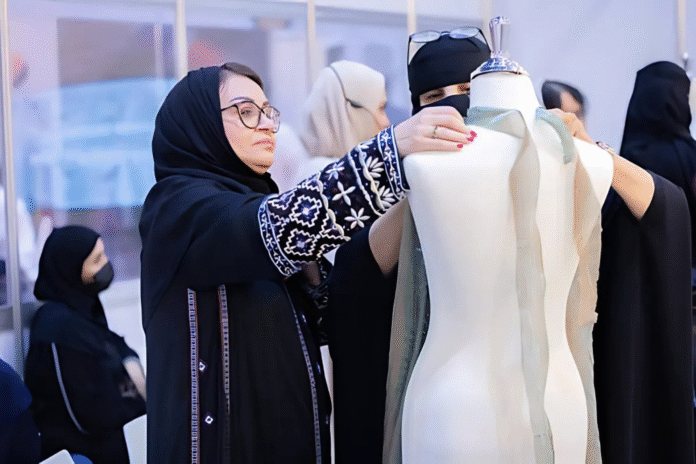
Saudi Fashion Association boosts talent with strategic partnerships, and as a result, the Kingdom’s fashion sector continues its steady growth. Moreover, the Saudi Fashion Association supports young creatives through impactful collaborations that combine training, exposure, and professional guidance.
Board member Rajaa Moumena, CEO and founder of the Future Institute of Higher Education and Training, explained that the Kingdom’s fashion body’s partnerships go beyond symbolism. In fact, they act as real channels for building skills and fostering creative growth.
Furthermore, she explained that these collaborations serve as bridges linking young designers to an integrated ecosystem. The Saudi Fashion Association also provides access to training programs, branding experts, content creators, and suppliers. As a result, this approach helps designers navigate the industry more effectively and efficiently.
Recent initiatives include a partnership with the Future Institute for Higher Education and Training, which offers specialized fashion programs. In addition, another collaboration with Alem Al-Ahjar, or Gemstones of the World, supports entrepreneurship in the jewelry sector. Together, these projects clearly show how the Saudi Fashion Association diversifies opportunities in creative industries.
The association also works closely with factories to provide hands-on training for male and female designers. Consequently, this training bridges the gap between theory and practice. It also prepares participants for competitive roles in the job market. Furthermore, the Saudi Fashion Association connects young professionals directly with employers and potential collaborators, giving them valuable early exposure.
Moumena explained that the Saudi Fashion Association’s strategy begins with foundational knowledge. It then moves to practical experience, and finally to industry integration. Therefore, the goal is to prepare a new generation of professionals capable of excelling nationally and internationally, while still staying rooted in Saudi culture.
While many fashion initiatives naturally attract women, particularly in accessories, perfumes, and jewelry, the Saudi Fashion Association ensures its programs remain open to all. Additionally, Moumena acknowledged challenges in aligning partnership goals with the association’s long-term vision. Nevertheless, she reaffirmed its commitment to delivering meaningful results.
She also noted a growing trend among Saudi designers: global distinction starts with local inspiration. Therefore, many creations now reflect Saudi beauty and identity, appealing to audiences inside and outside the Kingdom.
Encouraging young creatives, Moumena advised patience and careful planning. She also urged them to understand their audience and build projects on strong foundations. “Creativity alone is not enough; you must turn it into real value,” she said.
In conclusion, the Saudi Fashion Association is shaping a vibrant creative community. Moreover, it combines cultural authenticity with global competitiveness, and in doing so, it builds sustainable development in Saudi fashion.
