
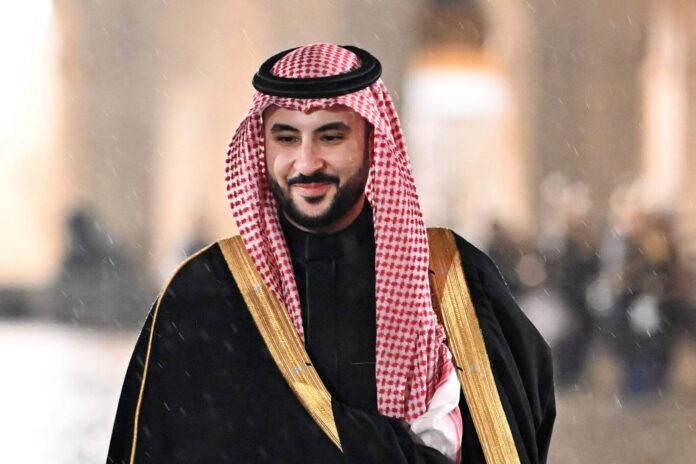
Iran talks involving Saudi Arabia and senior regional officials are taking place in Tehran to help ease regional tensions. Saudi Defense Minister Prince Khalid bin Salman is leading a delegation representing countries participating in the Makkah Joint Defense Agreement.
Dr. Rayed Krimly, Saudi Arabia’s deputy minister for public diplomacy, announced the visit on Monday. He said Prince Khalid would participate alongside Pakistan’s army chief, Field Marshal Asim Munir, and Türkiye’s intelligence chief, Ibrahim Kalin.
The discussions will also include Iranian President Masoud Pezeshkian and Mohsen Rezaei, secretary-general of Iran’s Supreme National Security Council. Their participation brings senior political, military and security officials together amid continuing regional concerns.
According to Krimly, the Iran talks form part of broader efforts by the Makkah agreement countries to reduce tensions. Furthermore, participating governments hope to encourage dialogue and pursue diplomatic solutions to the current situation.
The Saudi delegation’s visit reflects continued engagement between regional governments seeking ways to manage disagreements. Although officials have not outlined specific proposals, they have presented the meeting as an opportunity to strengthen communication and support de-escalation.
Saudi Arabia’s defense minister is joining senior representatives from Pakistan and Türkiye in discussions with Iranian leaders. Their involvement highlights the wider regional importance of maintaining diplomatic channels during periods of uncertainty.
Krimly also connected the meeting to mediation efforts undertaken by Qatar and Pakistan. Both countries have supported diplomatic initiatives aimed at reducing tensions and encouraging communication between regional parties.
The Iran talks therefore bring together several governments with an interest in preventing further escalation. However, officials have not disclosed the detailed agenda, expected outcomes or whether participants anticipate reaching specific agreements.
The Makkah Joint Defense Agreement provides the framework referenced in the announcement for participating countries’ engagement. Meanwhile, the meeting with Iranian officials creates an opportunity to discuss regional concerns through direct diplomatic contact.
The discussions also reflect wider efforts to maintain communication between governments during a sensitive period. Nevertheless, the announcement did not identify particular disputes for discussion or confirm whether the meeting would produce formal commitments.
Attention will now focus on whether the participants can identify practical steps to ease regional tensions. Any progress will depend on the substance of the discussions and the willingness of the parties to continue engaging diplomatically.
For now, Saudi Arabia has confirmed its senior-level participation, while officials have emphasized dialogue and de-escalation as the meeting’s central aims. The gathering underscores the importance of regional cooperation and sustained communication as governments seek diplomatic ways to manage tensions.
