
Saudi Arabia is preparing a major wave of infrastructure investments to modernize its economy and achieve sustainability goals. The Kingdom aims to mobilize $500 billion over the coming years. Forty percent of these funds will come from private-sector initiatives. These investments mark a major step in Saudi Arabia’s journey toward net-zero carbon emissions by 2060.
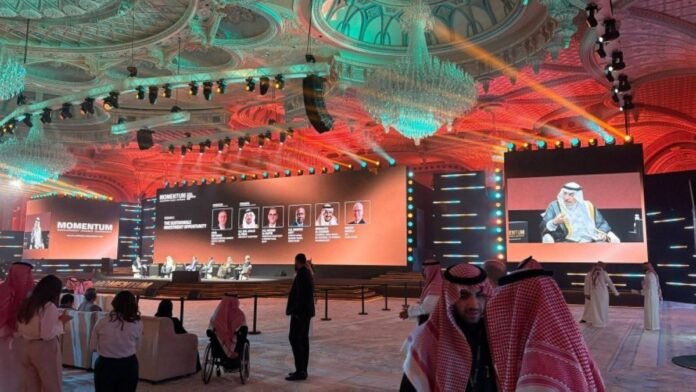
Minister of Investment Khalid Al-Falih outlined plans at the Development Finance Conference (MOMENTUM2025) in Riyadh. He said the infrastructure investments will flow through multiple channels. Privatization programs, Ministry of Energy projects, and major company initiatives, including ACWA Power and Aramco’s expansion in blue hydrogen, are central to the plan.
Saudi Arabia is also strengthening partnerships with regional allies, such as Egypt, to improve investment systems and reinforce value chains. Al-Falih noted that the Kingdom has exceeded its carbon reduction targets while keeping a balanced energy strategy. Renewable energy will supply 50 percent of electricity. High-efficiency gas turbines and battery storage will complement this.
On the digital front, the Kingdom is advancing toward becoming a global hub for artificial intelligence. Strategic agreements with international companies and digital infrastructure development will support transportation, airports, and smart city projects. The legislative framework for green finance, including green bonds and the carbon credit market, also supports sustainable development initiatives.
Al-Falih highlighted that Saudi Arabia leads approximately two-thirds of the Middle East’s green finance and ESG efforts. The Public Investment Fund has expanded sustainable financing instruments, including 100-year green bonds, further showing the Kingdom’s leadership.
Private and international partners play a vital role. They contribute value through active participation rather than just investment. The Kingdom is rapidly approaching the 15th position among the world’s largest economies. Sustainable projects include major airports, desalination plants, and tourism initiatives such as the Red Sea Project.
Al-Falih emphasized that Saudi Arabia’s combination of ambitious planning, strong credit ratings, robust strategies, and abundant capital positions it to lead the next phase of infrastructure investments globally. With a history of executing major projects efficiently, the Kingdom is set to attract private and international investors for a sustainable and high-impact future.
