
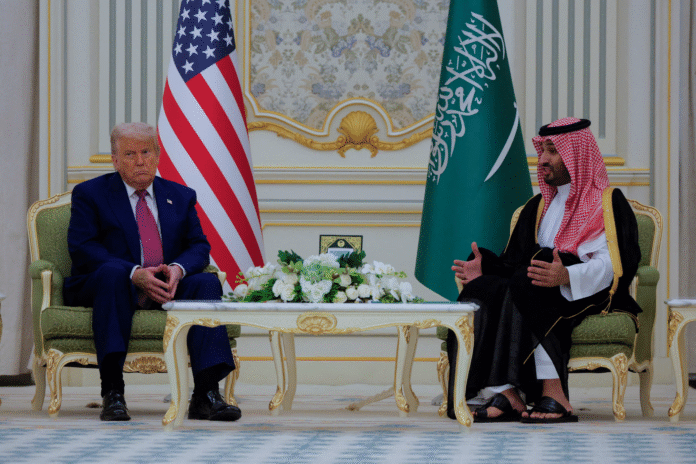
Saudi Arabia is standing firm on its conditions for normalizing ties with Israel, emphasizing that progress depends on a clear path to Palestinian statehood. The discussion comes ahead of the upcoming meeting between Crown Prince Mohammed bin Salman and U.S. President Donald Trump on November 18. This meeting will focus on a new defense pact but will also touch on the future of Middle East stability.
Trump has expressed optimism about Saudi Arabia joining the 2020 Abraham Accords, which brought Israel closer to several Arab nations. However, Riyadh continues to insist that recognition of Israel must follow a credible plan for Palestinian independence. According to Gulf officials, the Saudi government wants to avoid confusion and ensure full alignment with Washington before announcing any decision.
The Crown Prince’s visit will be his first to Washington since 2018. During the visit, he aims to strengthen defense and investment cooperation. While Trump hopes for a major diplomatic breakthrough, Saudi Arabia remains cautious. Officials stress that achieving Middle East stability requires justice for Palestinians, not quick political gestures.
Experts believe the Crown Prince will use his influence to push Trump for stronger U.S. support for a Palestinian state. Jonathan Panikoff, a former intelligence officer, noted that Riyadh will not move forward without “a credible and time-bound plan.” Despite recent optimism, many Arab nations remain wary due to ongoing tensions and Israel’s actions in Gaza.
The United Arab Emirates, Bahrain, and Morocco normalized ties under the Abraham Accords. Yet, Saudi Arabia views the situation differently. As the birthplace of Islam, it carries deep religious and regional responsibilities. Recognizing Israel without progress on Palestine could inflame public opinion and threaten Middle East stability.
The meeting is also expected to finalize a scaled-down defense agreement between Washington and Riyadh. The deal will expand military cooperation and allow quicker access to advanced U.S. weapons. Still, it stops short of a full treaty once sought by Saudi leaders. Analysts say this partial deal could evolve later if diplomatic progress is achieved.
For now, Saudi Arabia wants to separate its national security goals from the stalled peace process. It seeks strong defense guarantees while maintaining autonomy in its regional strategy. Officials believe that fulfilling security needs will shape future decisions on Palestine and Israel.
As Iran’s influence weakens and regional tensions shift, Riyadh is rethinking its approach. Yet, leaders remain clear: true Middle East stability will depend on fairness, cooperation, and the long-promised establishment of a Palestinian state.
