
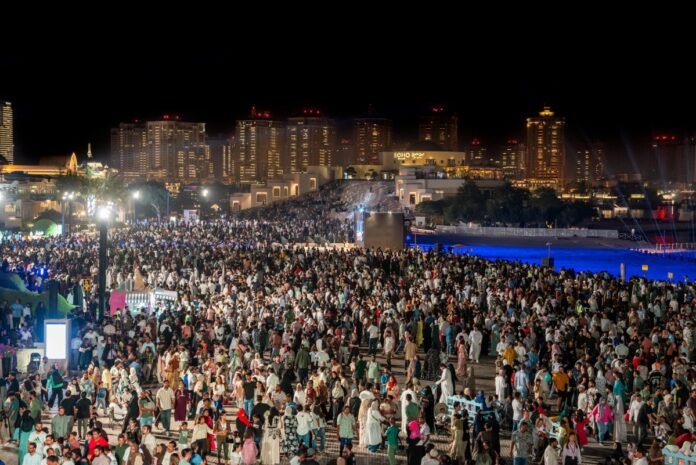
Qatar continued to record steady Qatar population growth throughout 2025, driven by economic activity and major infrastructure projects. Officials reported that the total population reached 3,214,609 people by the end of December, marking a 2.3 percent increase compared to December 2024. This trend reflects sustained demographic momentum across the country.
Earlier figures showed that Qatar’s population stood at 3,340,858 residents by the end of November, representing a 5.3 percent rise from the same period in 2024. Therefore, population growth has remained consistent in the final months of 2025, despite minor fluctuations. Analysts noted that rising demand for professional labor contributed significantly to the increase.
Several factors supported the continued Qatar population growth. Expanding economic activity in key sectors created more jobs for both locals and expatriates. In addition, large-scale infrastructure and development projects attracted workers from various fields. As a result, the labor market expanded alongside the population, boosting overall productivity.
Moreover, Qatar’s government emphasized national development objectives as part of long-term planning. Policies supporting urban growth, housing, and social infrastructure encouraged population stability. Simultaneously, the country focused on improving living standards to retain skilled professionals. Consequently, these initiatives reinforced demographic growth across multiple regions.
Experts also highlighted the link between population growth and economic diversification. As Qatar continues to develop non-oil industries, construction, tourism, and services sectors require a growing workforce. In turn, this drives further population expansion. Meanwhile, the nation’s strategic planning under the Qatar National Vision 2030 framework ensures population growth aligns with sustainable development goals.
The latest data shows that population growth was particularly strong in urban centers such as Doha, where infrastructure projects and business activity accelerated. Additionally, enhanced social services and housing initiatives helped accommodate the increasing number of residents. These measures, therefore, maintain balance between urban density and quality of life.
In conclusion, Qatar population growth in 2025 demonstrates the country’s ability to manage expanding demographics effectively. Economic development, infrastructure projects, and labor demand continue to drive growth. Moreover, planning under the Qatar National Vision 2030 framework ensures population increases support long-term national objectives. Overall, Qatar remains on a stable trajectory for continued demographic and economic progress.
