
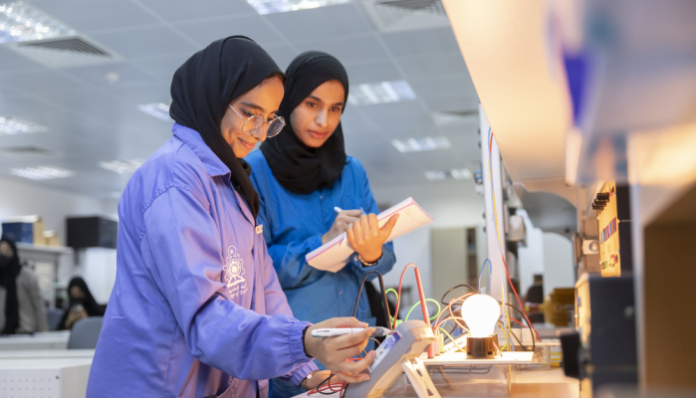
Omani women’s employment increased by 9 percent in 2025, reaching 270,696 employed women, according to national statistics. The National Centre for Statistics and Information reported growth across employment, education, property ownership and social protection. The figures also show gradual improvements in women’s economic participation and continued progress in several areas of public life.
Oman recorded 2,115,212 females in 2025, including 1,510,248 Omani women. Omani women therefore represented approximately 71 percent of the country’s female population. Meanwhile, women aged between 18 and 29 accounted for 18 percent of Omani women. Official projections estimate that their population will reach around 1,998,744 by 2040.
Economic participation among Omani women aged 15 and above also increased during the year. The rate reached 32.9 percent in 2025, compared with 32.4 percent in 2024. Furthermore, working women represented approximately 85 percent of economically active Omani women. Females also accounted for around 30 percent of employed Omanis aged 15 and above.
Professional employment contributed to these figures, with approximately one-quarter of employed Omani women working in specialist occupations. These roles covered scientific, technical and human-related fields. In addition, employers appointed 31,808 Omani women during 2025, highlighting continued recruitment across the national workforce.
Healthcare indicators also showed developments in maternal health and childbirth. The total fertility rate among Omani women aged 15 to 49 remained at 2.8 births in 2025. Moreover, specialised medical professionals supervised 99.9 percent of births. Maternal mortality also fell from 14.5 deaths per 100,000 live births in 2024 to 11.3 the following year.
At the same time, live births among women aged 40 to 44 increased by approximately 11 percent. These figures provide additional information about maternal health trends across Oman. However, the statistics do not explain the specific factors behind these changes.
Education data revealed substantial female participation across schools and higher education institutions. During the 2025/2026 academic year, 248,855 Omani females aged ten and above attended school. Nevertheless, enrolment in adult education and literacy centres declined by 12 percent to 3,987 students.
Higher education participation continued to grow during the previous academic year. The number of Omani women enrolled in higher education reached 79,250 in 2024/2025, representing a 5 percent annual increase. Additionally, the number of women holding postgraduate qualifications rose by approximately 11 percent. Meanwhile, 4.8 percent of Omani women aged ten and above had no educational qualifications in 2025.
Marital statistics recorded changes during the same period. Oman’s overall marriage rate increased to 5.7 in 2025, compared with 4.5 in 2024. By contrast, the divorce rate remained unchanged at 1.
Property ownership also recorded annual growth among Omani women. The number owning at least one plot of land increased by 2 percent, while residential property ownership rose by 3 percent. Vehicle ownership also grew by 4 percent compared with the previous year. These indicators provide insight into women’s ownership of assets and economic participation.
Social protection programmes reached 743,023 Omani women in 2025, accounting for approximately half of all beneficiaries. These programmes included 616,446 child benefit recipients, 5,076 orphan benefit recipients and 5,686 widow benefit recipients. Additionally, 95,576 women received elderly benefits, while 20,239 received disability benefits.
Women represented 9 percent of widow benefit beneficiaries and 36 percent of maternity benefit recipients. Taken together, the figures provide a broader picture of women’s employment, education, health and social support in Oman. The latest Omani women’s employment statistics also highlight changes in economic participation and asset ownership, alongside continuing developments in public services.
