
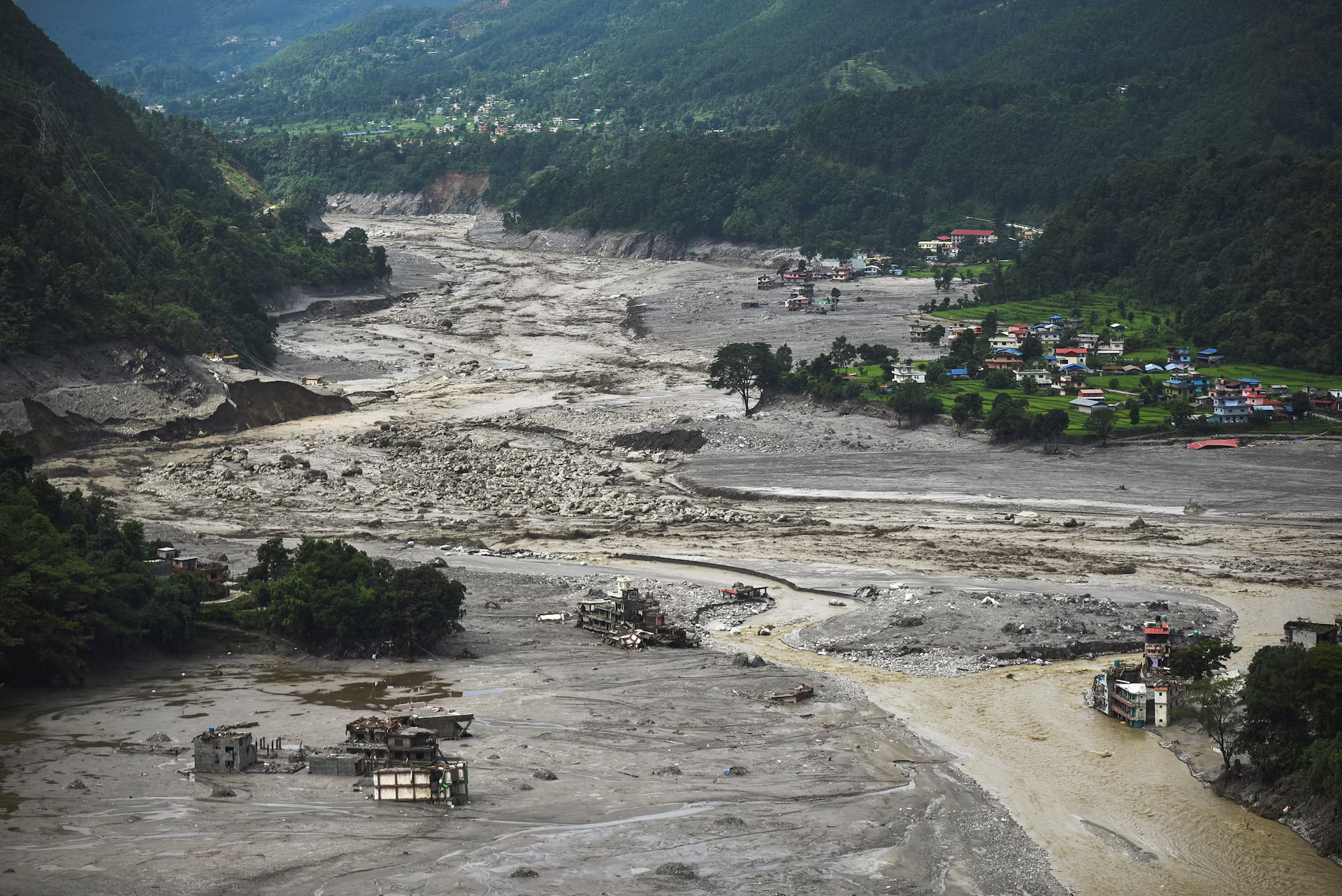
Nepal Floods have killed more than 1,000 people across the Himalayan region, while thousands remain missing after devastating flash floods.
Nepali authorities reported that 1,050 bodies had been recovered inside Nepal following the disaster. Meanwhile, officials said 3,916 people remained missing as rescue teams continued searching affected communities.
The disaster began on August 26 after a high-altitude glacial collapse near the China-Nepal border. A powerful surge of freezing water, rocks, and debris swept through villages and infrastructure across the mountainous region.
Chinese authorities reported 16 deaths and 546 missing people in Tibet. Together, reported figures across Nepal and Tibet reached 1,066 deaths and 4,462 missing people.
Indian authorities also recovered at least 17 bodies from rivers further downstream. Consequently, search teams across three countries continue monitoring waterways and remote areas for additional victims.
As rescue efforts continue, some families have started symbolic funeral ceremonies for relatives presumed dead. For many families, the ceremonies provide an opportunity to mourn despite receiving no confirmation about their loved ones.
Relatives have searched shelters, hospitals, and temporary mortuaries for days. However, as hopes of finding survivors decline, some families have decided to perform traditional last rites.
Rescue officials have not completely abandoned the possibility of survivors. Teams continue working around blocked hydropower tunnels, where thick layers of sludge and debris have complicated rescue operations.
Workers have so far recovered bodies from several tunnels but have not confirmed survivors there. Nevertheless, rescue crews continue digging, drilling, and removing debris in difficult conditions.
Nepal’s Foreign Minister Shisir Khanal said authorities still hoped for unexpected discoveries during the ongoing search. He urged rescue teams and families not to completely abandon hope.
The disaster has also intensified concerns about the growing climate risks facing the Himalayan region. Nepal’s Prime Minister Balendra Shah linked the catastrophe to increasingly severe environmental threats associated with climate change.
Scientists say rising temperatures are accelerating glacier melt throughout the Himalayas and Hindu Kush mountain ranges. These glaciers provide essential water supplies for hundreds of millions of people across Asia.
The United Nations estimates that Himalayan glaciers support approximately 240 million people living in mountain regions. Their waters also serve around 1.65 billion people across major South and Southeast Asian river valleys.
Therefore, scientists warn that changes in Himalayan glaciers could create serious consequences for communities far beyond Nepal. Rapid melting can increase immediate flood risks while also threatening long-term water availability.
Nepal has contributed relatively little to global greenhouse gas emissions, yet climate-related disasters increasingly threaten its communities. As a result, officials have called for greater international cooperation on climate adaptation and disaster preparedness.
The destruction has also placed enormous pressure on Nepal’s limited financial resources. Government officials have warned that rebuilding damaged infrastructure could eventually cost billions of dollars.
Meanwhile, access challenges have slowed recovery operations in some of the hardest-hit locations. In Tibet, workers restored road access to Gyirong Port only after days of continuous repair efforts.
Authorities in Nepal have also faced difficulties managing large numbers of unidentified victims. With mortuaries overwhelmed, officials began burying unidentified bodies after collecting DNA samples for future identification.
Information access has created additional challenges, particularly in Tibet. Restrictions on foreign journalists have made independent reporting and verification of casualty figures more difficult.
Tibetan advocacy organizations outside China have questioned aspects of Beijing’s account of the disaster. Chinese authorities, however, maintain that officials have provided information openly, transparently, and promptly.
Nepal Floods have exposed the region’s vulnerability to sudden glacial disasters and increasingly unpredictable environmental conditions. At the same time, rescue operations continue as teams clear debris and reach isolated communities.
Officials caution that the casualty figures could rise as search teams enter remote areas. Families meanwhile continue waiting for information while authorities work to identify victims and locate missing people.
The disaster has highlighted the urgent need for stronger regional preparedness and international cooperation. As Himalayan temperatures continue rising, governments face increasing pressure to protect vulnerable communities from future climate-driven emergencies.
Ultimately, Nepal Floods have created a humanitarian crisis extending across borders and affecting communities throughout the Himalayan region. Recovery will likely require extensive resources, sustained rescue efforts, and stronger long-term climate resilience measures.
