
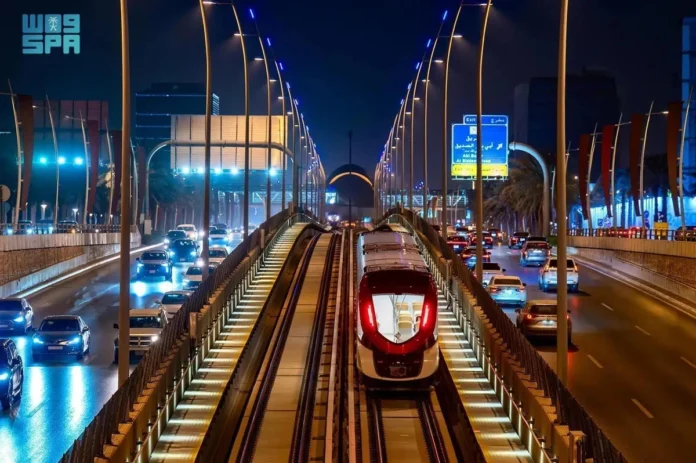
Saudi rail travel recorded more than 40.9 million passenger journeys during the third quarter of 2026. The Riyadh Metro accounted for the largest share, attracting 30.4 million trips between July and September. These figures highlight the growing role of rail transport across the Kingdom’s major cities and transport hubs.
The Transport General Authority’s quarterly figures showed strong demand across several rail services. Meanwhile, the automated people mover at King Abdulaziz International Airport in Jeddah carried seven million passengers. That represented a substantial increase from the 3.9 million journeys recorded during the previous quarter.
Intercity rail services also transported millions of passengers throughout the three-month period. These services carried approximately 2.5 million journeys altogether, connecting major cities and supporting domestic travel. The Haramain High-Speed Railway accounted for more than 1.9 million of those trips.
The Haramain railway connects Makkah and Madinah through Jeddah, King Abdulaziz International Airport, and King Abdullah Economic City. Passenger numbers increased from approximately 1.6 million during the second quarter. This growth reflects continued use of the high-speed connection between important religious, commercial, and transport destinations.
Saudi Rail Journeys also included substantial activity across the country’s eastern and northern networks. The East Network recorded approximately 393,900 passenger trips during the third quarter. Its route connects Riyadh with Abqaiq, Hofuf, and Dammam, serving communities and commercial centres along the way.
Meanwhile, the North Network recorded around 258,600 journeys during the same period. The route links Riyadh with Majmaah, Qassim, Hail, Al-Jouf, and Qurayyat. Together, these regional connections expand access between major urban centres and communities farther from the capital.
The Transport General Authority reported an increase in train passenger numbers compared with the same quarter last year. Furthermore, total rail journeys had exceeded 38 million during the second quarter of 2026. The latest figures therefore show continued demand for rail services across different parts of the Kingdom.
Freight operations also contributed to the railway sector’s quarterly performance. Saudi trains transported approximately 3.9 million tonnes of minerals and goods between July and September. This exceeded the 3.7 million tonnes recorded during the previous quarter, indicating growth in freight movement.
Rail transport supports both passenger mobility and the movement of commercial goods across Saudi Arabia. In particular, connections between cities can offer alternatives to road travel and help ease congestion. Additionally, railway services link airports, economic centres, and destinations that attract domestic and international visitors.
The expanding network also supports wider economic and environmental objectives. Greater use of rail can help improve transport efficiency while supporting connections between regional markets. As demand continues to develop, passenger services and freight operations remain important parts of the Kingdom’s transport infrastructure.
The latest figures underline the scale of Saudi Arabia’s rail activity during the third quarter. Saudi Rail Journeys reached more than 40.9 million, with the Riyadh Metro accounting for most passenger trips. Meanwhile, rising airport rail use, intercity demand, and freight volumes highlight the network’s growing contribution to national transport.
